Arushi Nath. Better My City, my AI-powered civic issues reporting platform for school students, has been awarded 2nd Place in the Public Projects category at the City of Toronto Open […]
Arushi Nath.
Better My City, my AI-powered civic issues reporting platform for school students, has been awarded 2nd Place in the Public Projects category at the City of Toronto Open Data Awards (2025–2026).
The annual Open Data Awards recognize projects that use Toronto’s open datasets to generate measurable public impact. This year, 45 submissions were reviewed by an expert panel of municipal leaders, city staff, civic technologists, AI engineers, and academics. Projects were evaluated based on public impact, innovation, and user-centricity.
The Better My City app was recognized for its innovative merging of AI with open datasets and the mobile usage patterns of school students to automate and enhance 311 reporting. The 2026 Awards Gala Ceremony, bringing together the winners, was held at Metro Hall, Toronto, on 11 February 2026. As a winner, I delivered a presentation about my app, how it was used by students, the open datasets it leveraged, and how it made the city better.
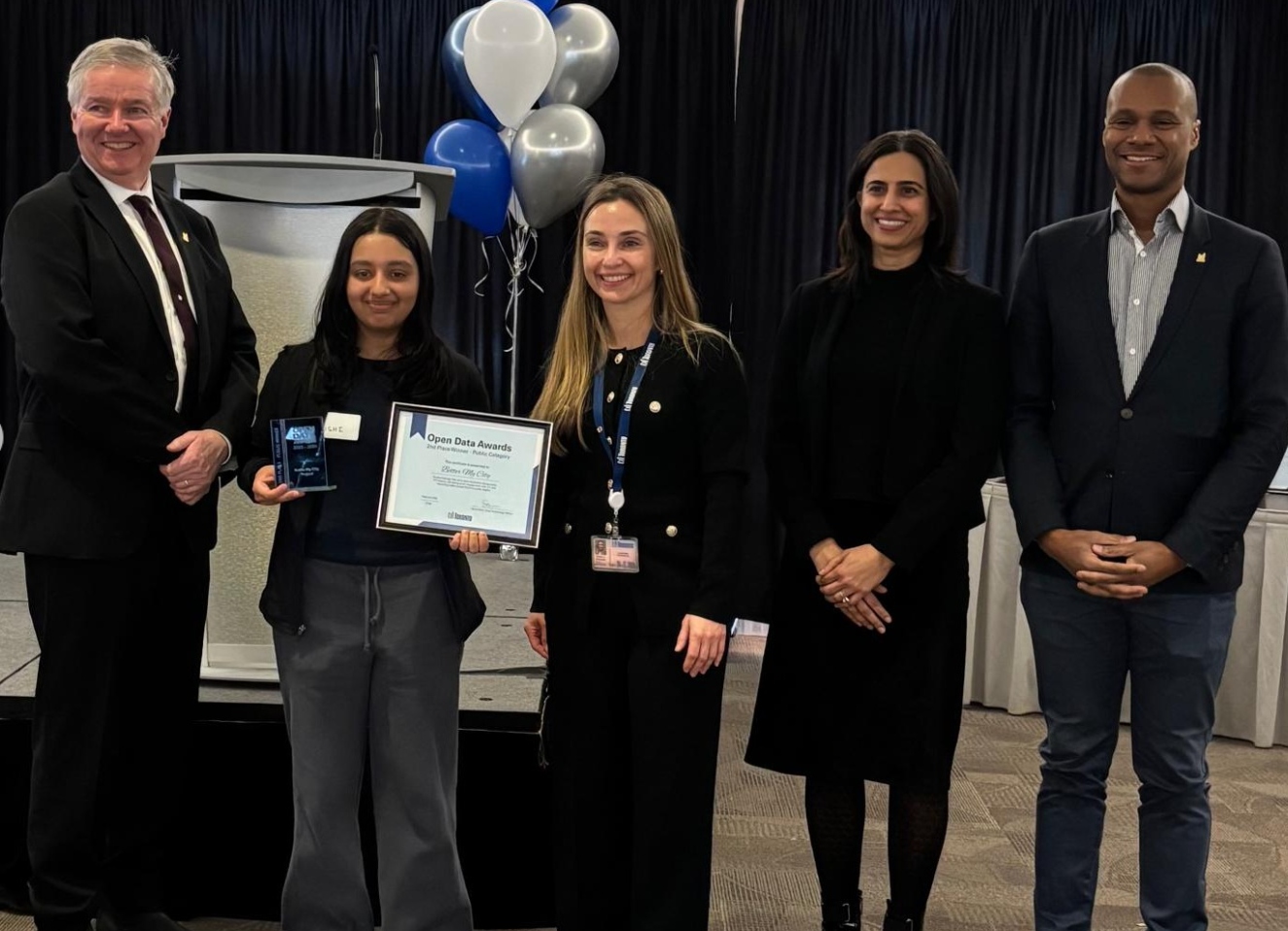
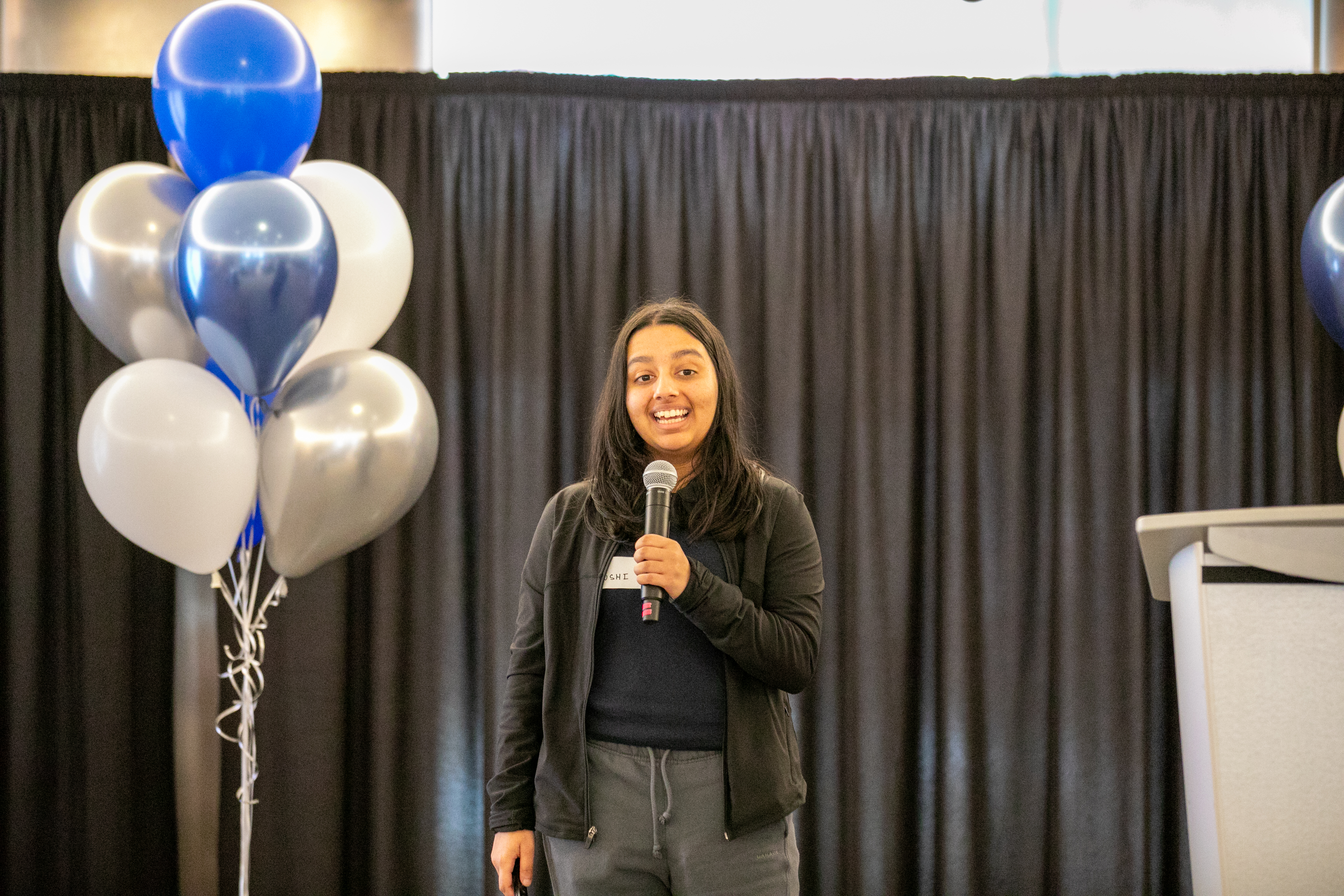
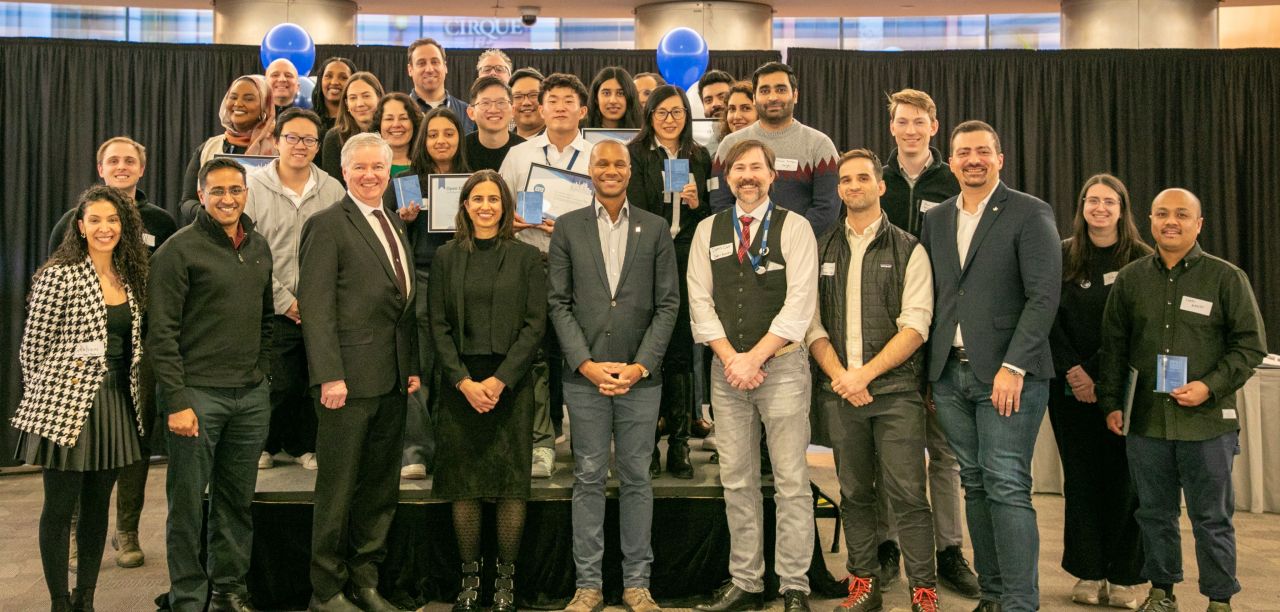
Receiving the Second Place Award, City of Toronto Open Data Award from City of Toronto Councillors and Staff.Speaking about “Better My City” and value of Open Data for the Public Good at Open Data Awards Gala on 11 Feb 2026Group photographs with other City of Toronto Open Data winners and organizers.
The Problem: Students Experience the City Daily, But Civic Engagement is Weak
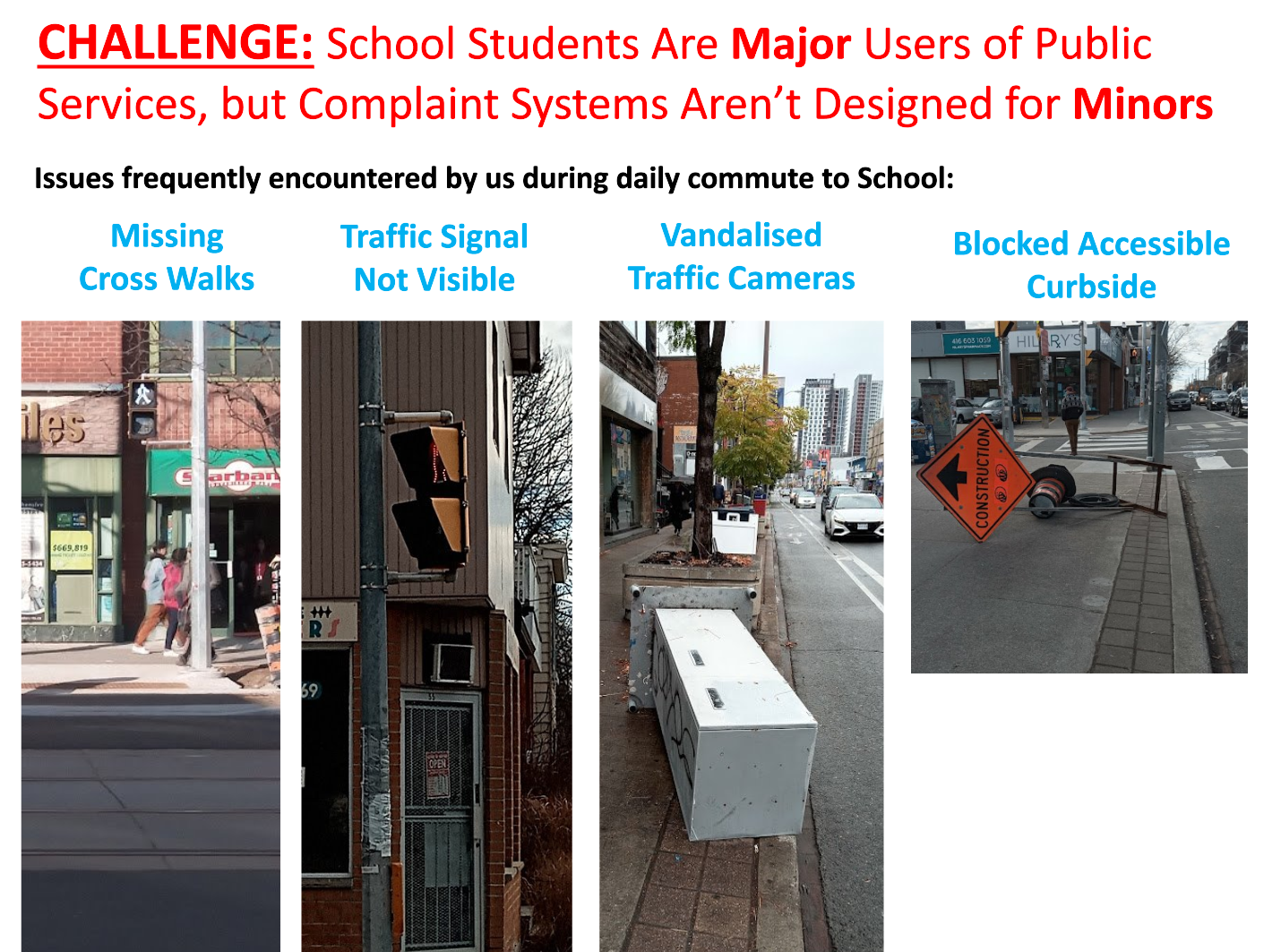
Toronto has over 100,000 high-school students, and are one of the biggest daily users of public infrastructure. Students walk, bike, and take transit to school and after school activities along fixed routes every day. Students navigate construction sites, encounter unsafe street crossings, speeding cars, and accessibility gaps in real time. They leave for school early in the morning, often making them the first to notice:
Faded crosswalks
Vandalized bus stops
Malfunctioning walk signals
Overflowing trash bins
Icy sidewalks
Obstructed accessibility paths
These issues make the school commute less safe and less pleasant than it should be. Yet few students report them because civic reporting systems like 311 Toronto do not speak the language of youth.
Selecting the correct category from dropdown menus
Completing text-based forms
Writing detailed issue descriptions
The process takes time and falls outside typical youth mobile usage patterns, making it unappealing and inaccessible. The result is a civic participation gap: youth experience infrastructure failures firsthand but lack student-friendly tools to make a difference.
The Opportunity: Transforming Mobile Photographs into Civic Signals using AI
Most students carry mobile phones and constantly document their daily lives – friends, food, events, moments. They are fluent in social media and increasingly comfortable using AI tools. I wanted to redirect that instinct for documentation and hyperlocal observation toward civic improvement.
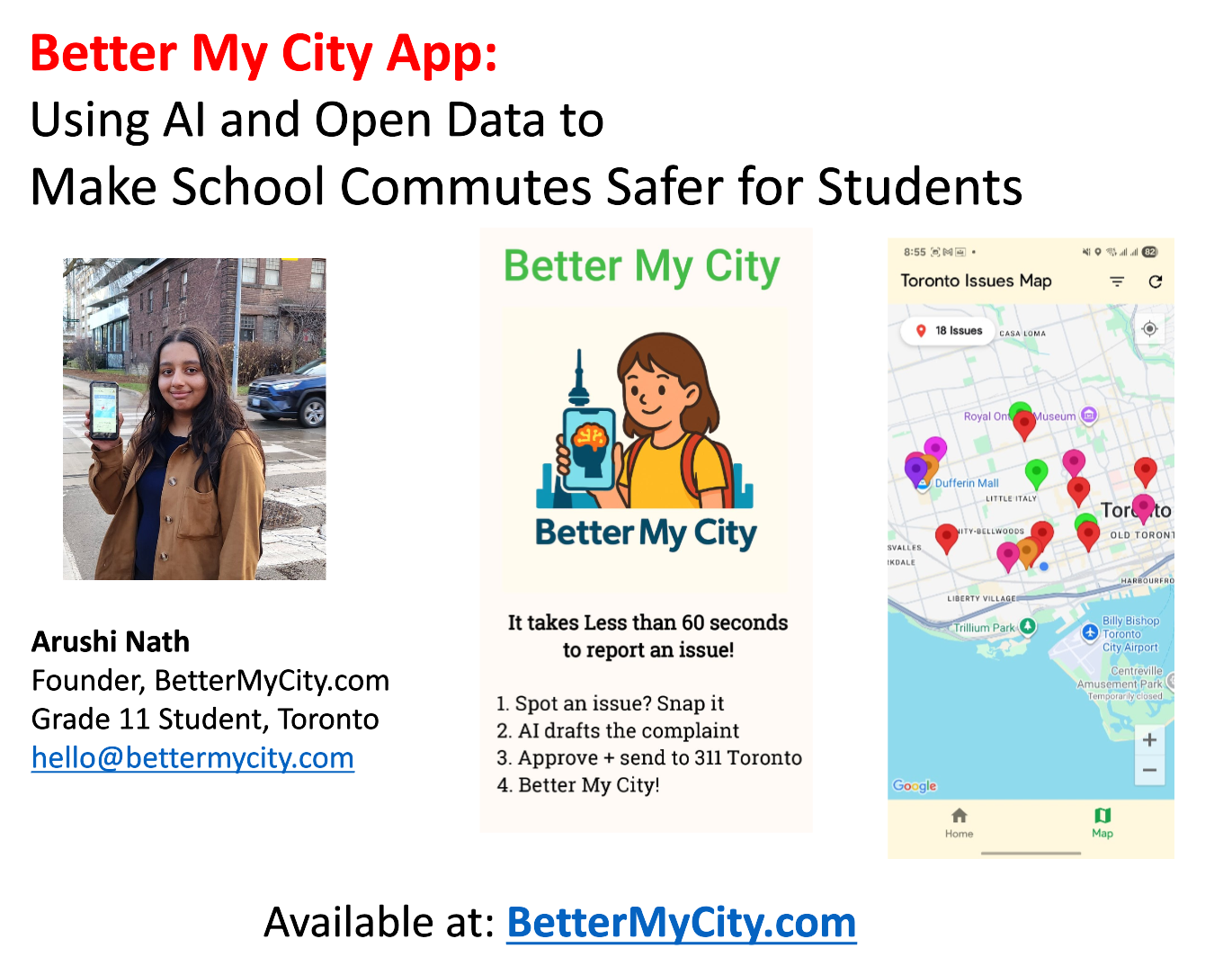
Better My City transforms the simple act of snapping a photo into structured civic input – converting everyday student observations which make their school commute unsafe into actionable report on 311 Toronto.
The Solution: Images and AI-Assisted Civic Reporting
Better My City is a Flutter-based mobile application designed to make municipal systems speak the language of youth to attract their usage.
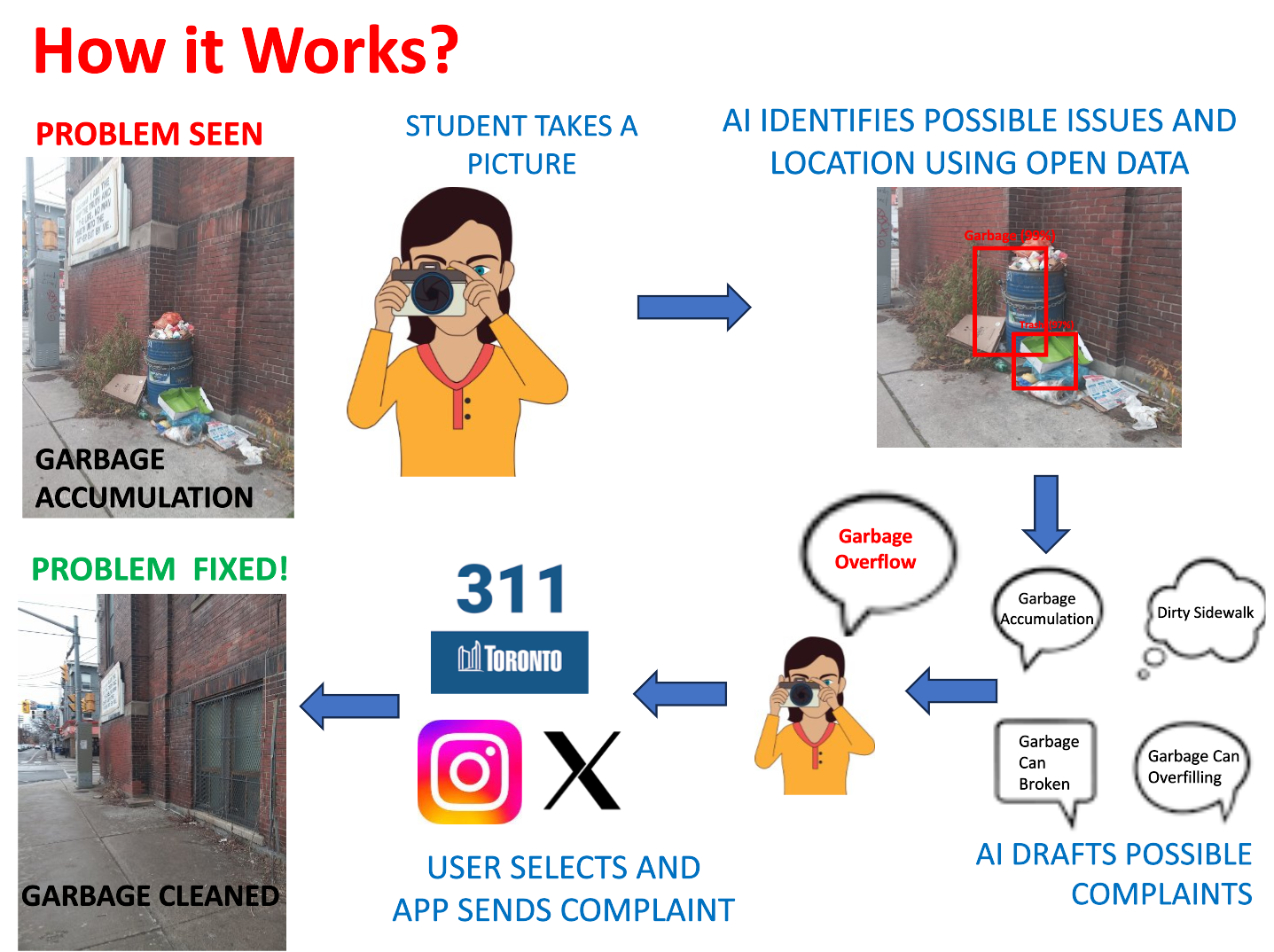
When a student encounters a civic issue, they simply point and take a photograph using the Better My City app. The app uses:
Device GPS and EXIF metadata of the picture to determine precise location
Reverse geocoding to confirm street-level context
The Gemini Vision API for multimodal image classification
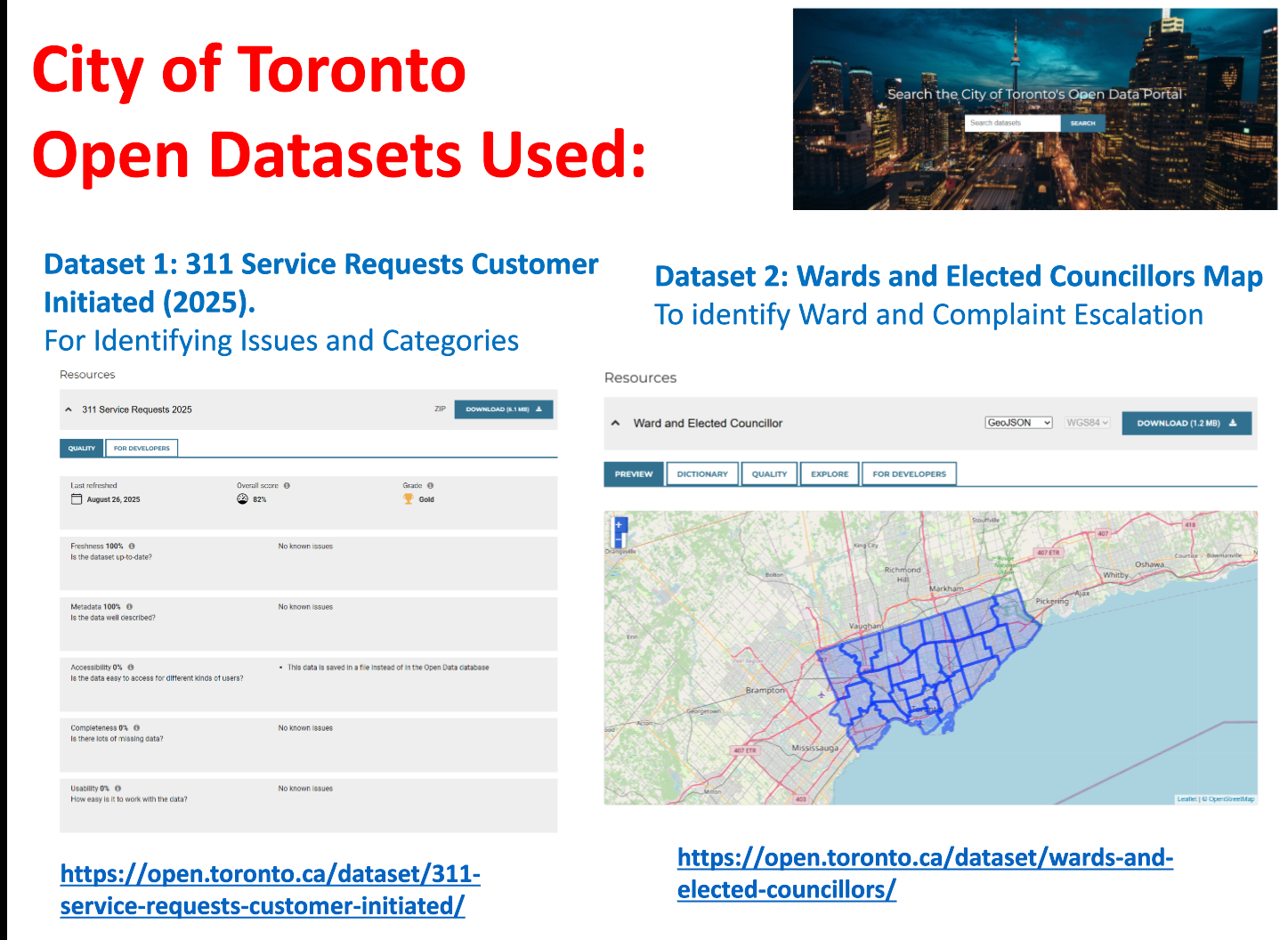
Patterns from Toronto’s 311 Service Requests dataset to align reporting categories
The City’s open ward dataset to map ward boundaries
Within seconds, based on the interpretation of the photograph and the associated meta data, the app generates a structured draft complaint aligned with municipal reporting standards, complete with date, ward number, and hash tags.
Students can:
Submit the report on Better My City which then tweets it to 311 Toronto
Copy the report and send them on their own
View the issue on a live crowdmap powered by Google Maps
Track ward-level issue clusters
Reports and images are securely stored via Firebase, with real-time streams updating the map instantly as new reports are submitted. By automating classification, geolocation, and form filling, and keeping it multi-media based, Better My City almost gamifies youth participation – turning everyday observations into measurable public impacts.
Real Impact: What Has Been “Made Better”?
To date, the platform has facilitated 75+ student-generated reports across multiple wards in Toronto. Reports cluster into four major categories:
Road Safety: faded crosswalks, malfunctioning signals, obstructed bike lanes Accessibility: icy sidewalks, blocked curb cuts Maintenance: dumping hotspots, broken benches Infrastructure Gaps: missing signage, unsafe construction zones
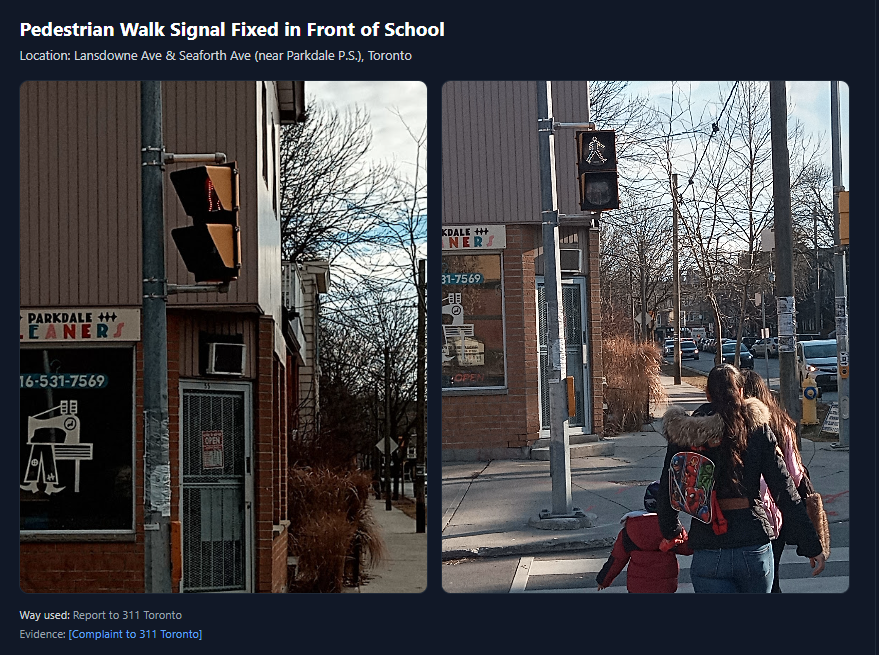
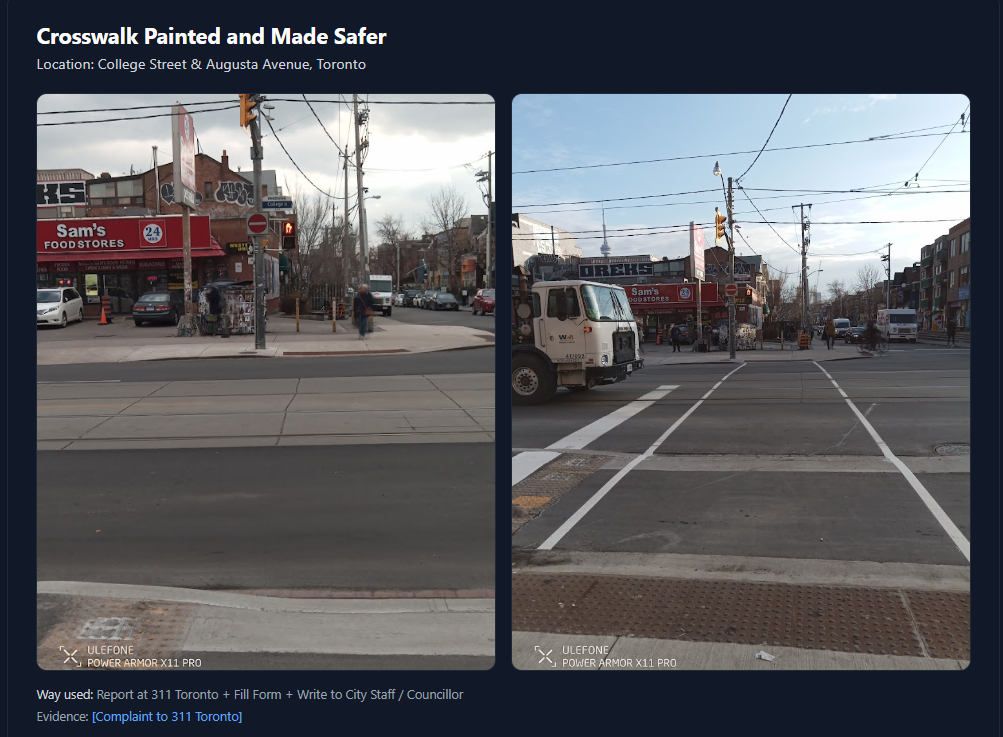
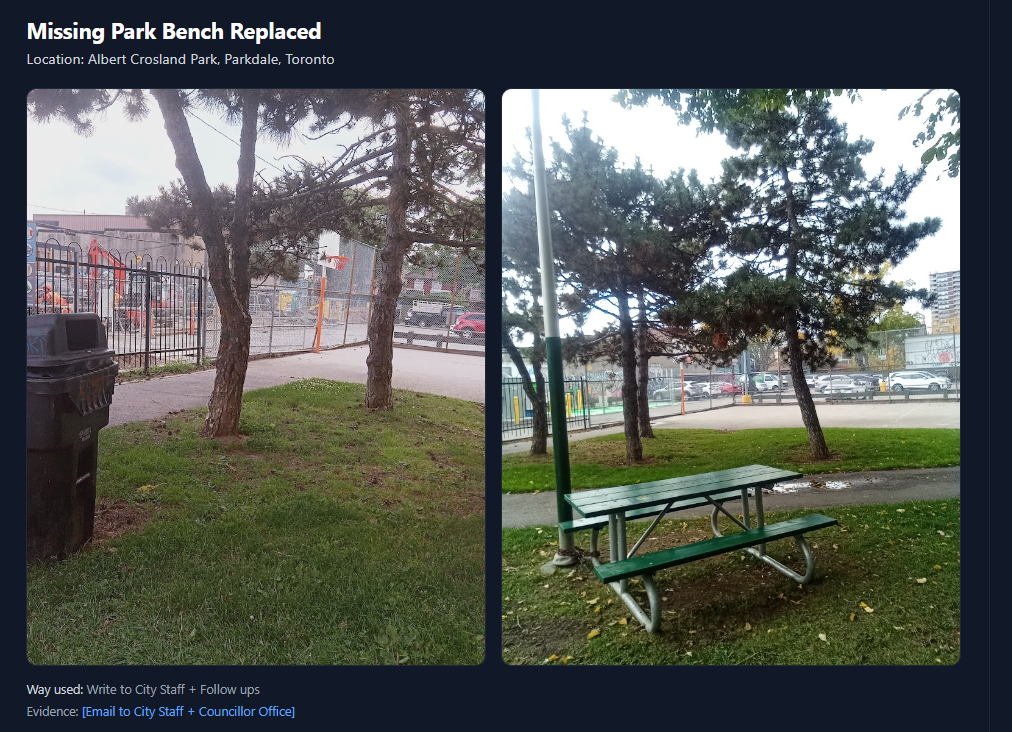
Examples from the Made Better section of the App include:
Obstructed walk signals cleared within 24 hours
Overflowing garbage bins addressed after student submissions
Faded crosswalk markings repainted
Missing park benches replaced following sustained reporting
School-zone safety concerns escalated into formal review pipelines
Icy sidewalk hazards or debris in bike lanes cleared more rapidly after student documentation
Vandalized speeding cameras restored (this category no longer exists as Government of Ontario has banned speed cameras against all scientific evidence putting safety of vulnerable users at risk)
Students can now submit a structured report in under 60 seconds using a single photo – compared to several minutes navigating traditional 311 forms.
The difference is not just speed. It is empowerment. Students have connected with ward councillors, attended public consultations, visited City Hall, delivered deputations, and put classroom civics into action – experiencing firsthand how municipal systems respond to student input and collective voices.
Why This Matters
Open data is powerful. When merged with AI and aligned with mobile phone usage patterns, it becomes a tool for public good — enabling students to engage with their City and make it better for everyone.
Better My City demonstrates that by speaking the language of youth and using the tools we already use, civic participation does not need to wait for voting age. Students who interact with the city before 18 are more likely to become committed voters, city builders, good samaritans, informed citizens, and strong leaders. And the world needs more of them.
What’s Next?
Use of Better My City by fellow students has generated feedback for new features and improvements, including:
Ward-level dashboards
Ability to re-report or remove an issue if unresolved or resolved
2025 Third Grand Award, International Science and Engineering Fair, USA. 2023 Second Prize Winner – European Union Contest for Young Scientists (EUCYS). Best of the Fair Award, Gold Medal, Top of the Category, Youth Can Innovate, and Excellence in Astronomy Awards at Canada Wide Science Fair 2023 and 2022. RISE 100 Global Winner, Silver Medal, International Science and Engineering Fair 2022, Gold Medal, Canada Wide Science Fair 2021, NASA SpaceApps Global 2020, Gold Medalist – IRIC North American Science Fair 2020, BMT Global Home STEM Challenge 2020. Micro:bit Challenge North America Runners Up 2020. NASA SpaceApps Toronto 2019, 2018, 2017, 2014. Imagining the Skies Award 2019. Jesse Ketchum Astronomy Award 2018. Hon. Mention at 2019 NASA Planetary Defense Conference. Emerald Code Grand Prize 2018. Canadian Space Apps 2017.




 HotPopRobot