Arushi Nath The 75th Regeneron International Science and Engineering Fair (ISEF), held from May 10th to 17th, 2025, in Columbus, Ohio, is the world’s largest annual STEM competition for pre-college […]
Arushi Nath
The 75th Regeneron International Science and Engineering Fair (ISEF), held from May 10th to 17th, 2025, in Columbus, Ohio, is the world’s largest annual STEM competition for pre-college students. This year it brought together nearly 1,700 young scientists from over 60 countries, showcasing their research across 22 categories spanning science, engineering, and mathematics.
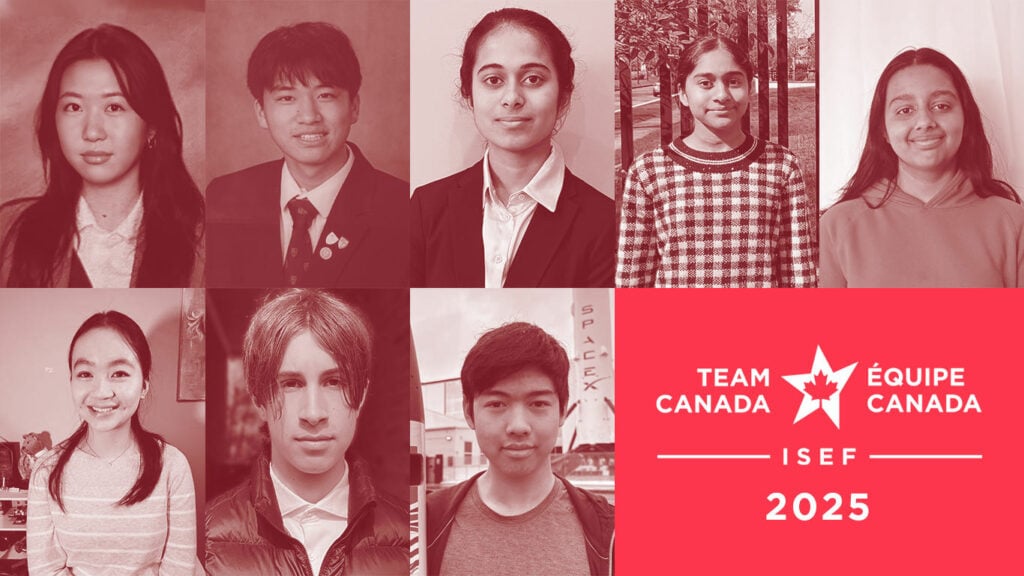
Following a rigorous selection process, I was honored to be chosen as one of eight individuals representing Team Canada at ISEF. It was a privilege to represent Canada on the international stage.
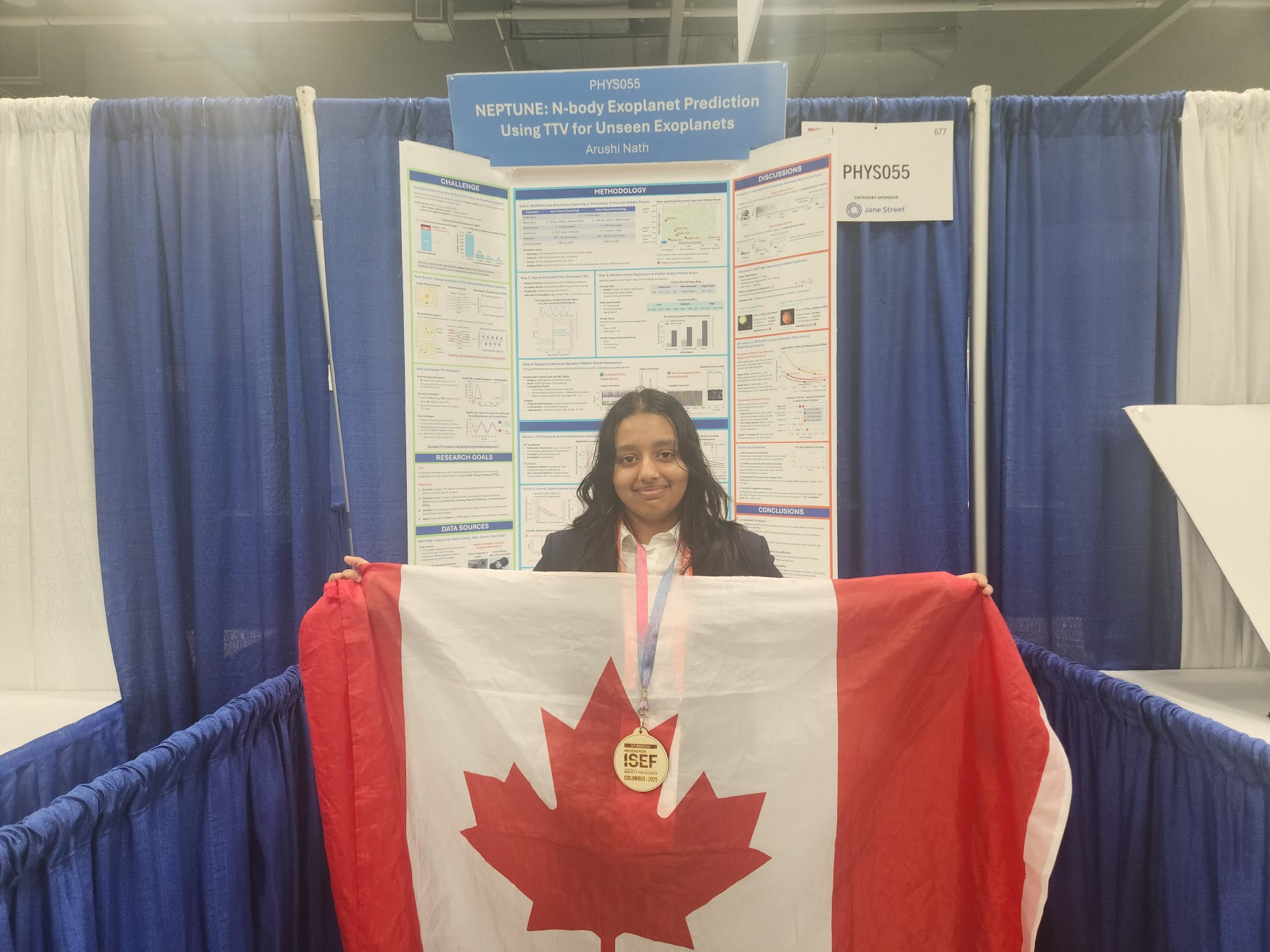
NEPTUNE is an innovative and accelerated approach designed to detect unseen exoplanets by analyzing Transit Timing Variations (TTVs) of known planets. Traditional exoplanet detection methods often overlook multi-planet systems containing long-period or non-transiting planets due to observational biases favoring short-period transiting planets. NEPTUNE bridges this gap by analyzing Transit Timing Variations (TTVs) of known planets to detect, characterize, and assess the habitability of possible unseen companions.
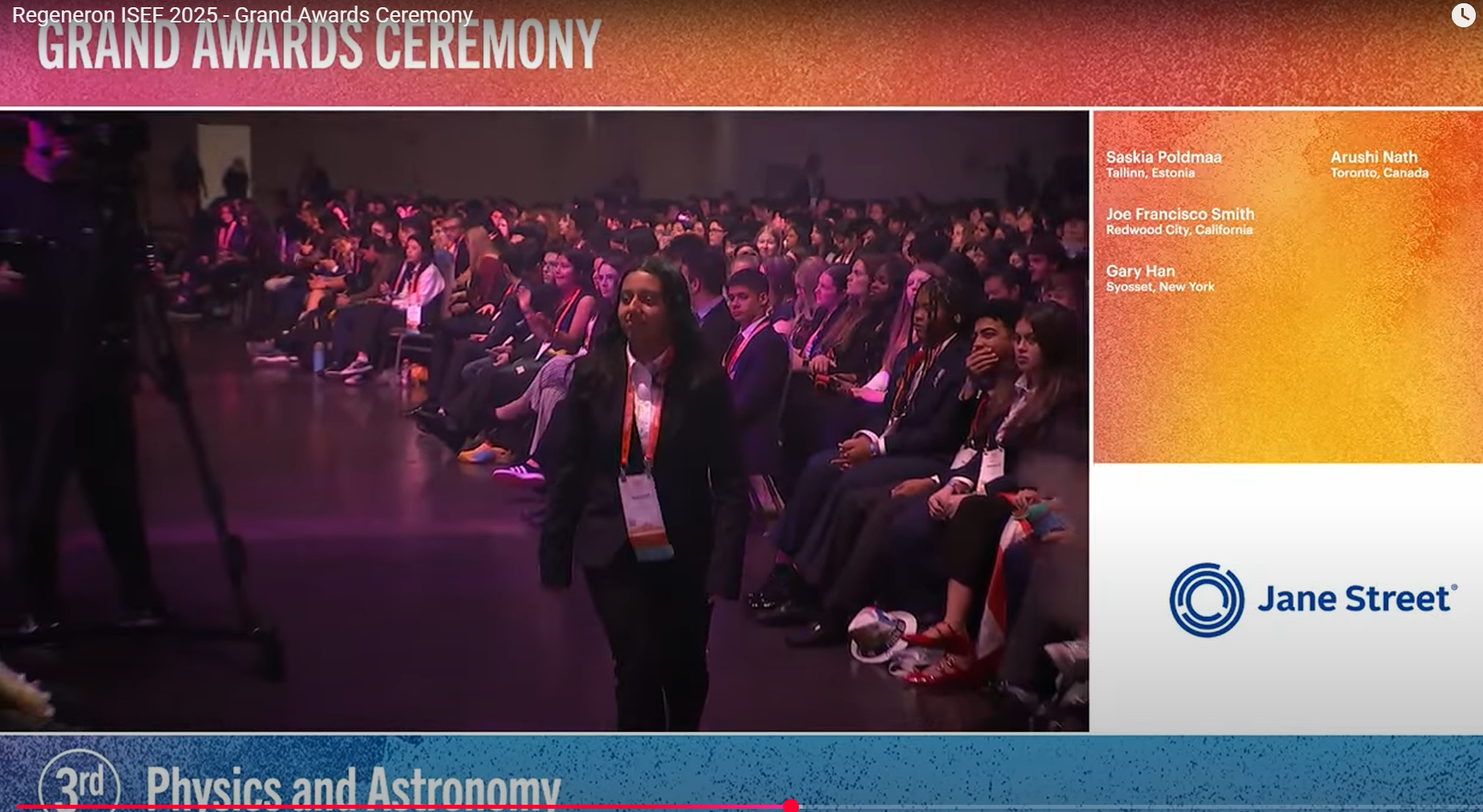
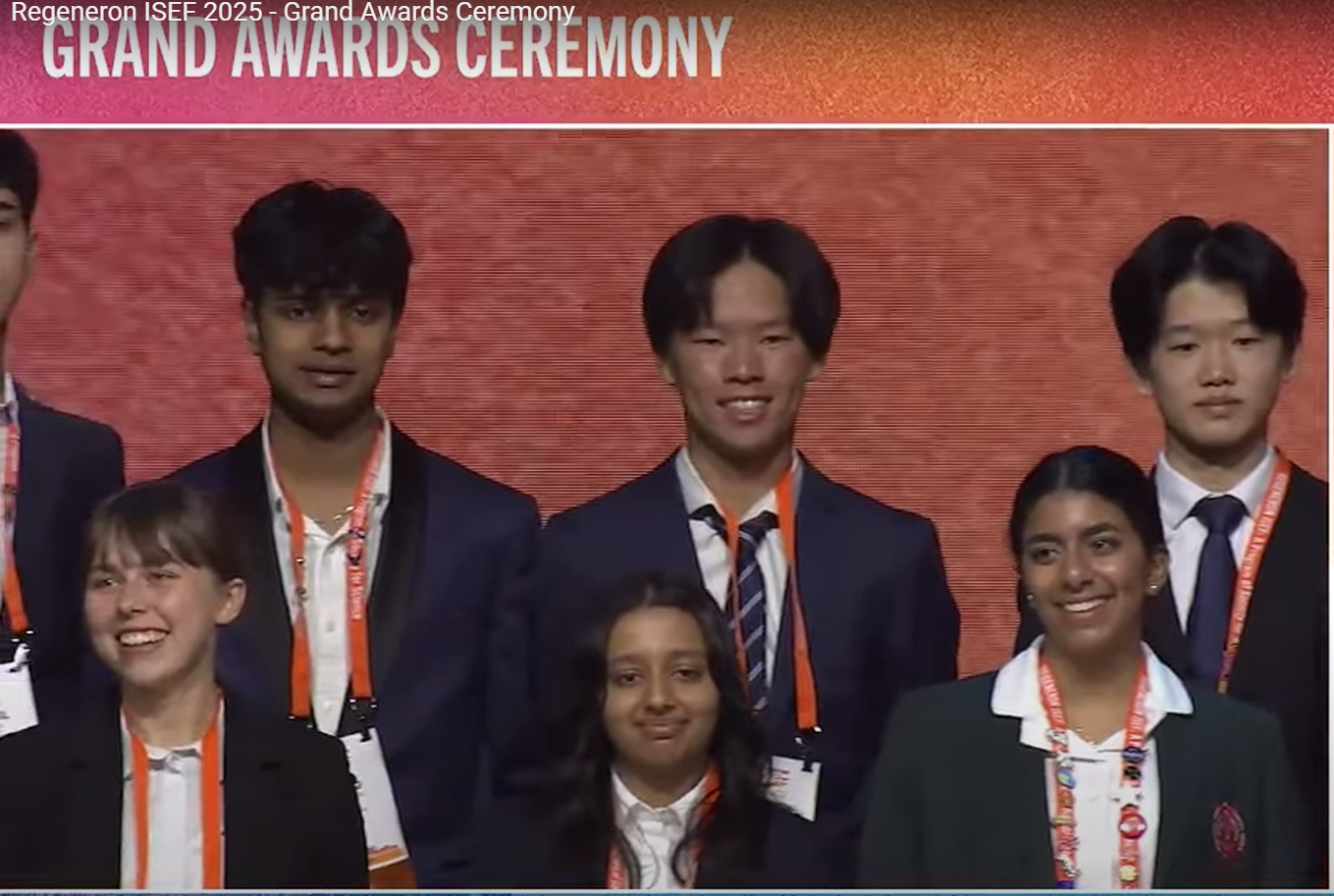
I entered the project under the ISEF’s Physics and Astronomy Category which had almost 80 submissions from other countries. Projects in this category spanned a diverse range, from quantum computing and artificial intelligence to spectroscopy and astrophysical phenomena. The project was well-received and I had 7 individual judging interviews of 15 minutes each. It was a very proud moment for me when my name was called on the stage to have won the Third Grand Award.
On the ISEF Stage for the Third Grand Award, alongside other winners
Day 0: Arrival
Members of Team Canada traveled from across the country— from British Columbia, Ontario, and Saskatchewan—to meet at Toronto Pearson Airport. We were joined by two delegates who accompanied us throughout our trip, assisting us with logistics, preperation and ensuring everything went smoothly. After gathering, we flew together to Columbus, Ohio, and settled into our hotel, ready for the week ahead.
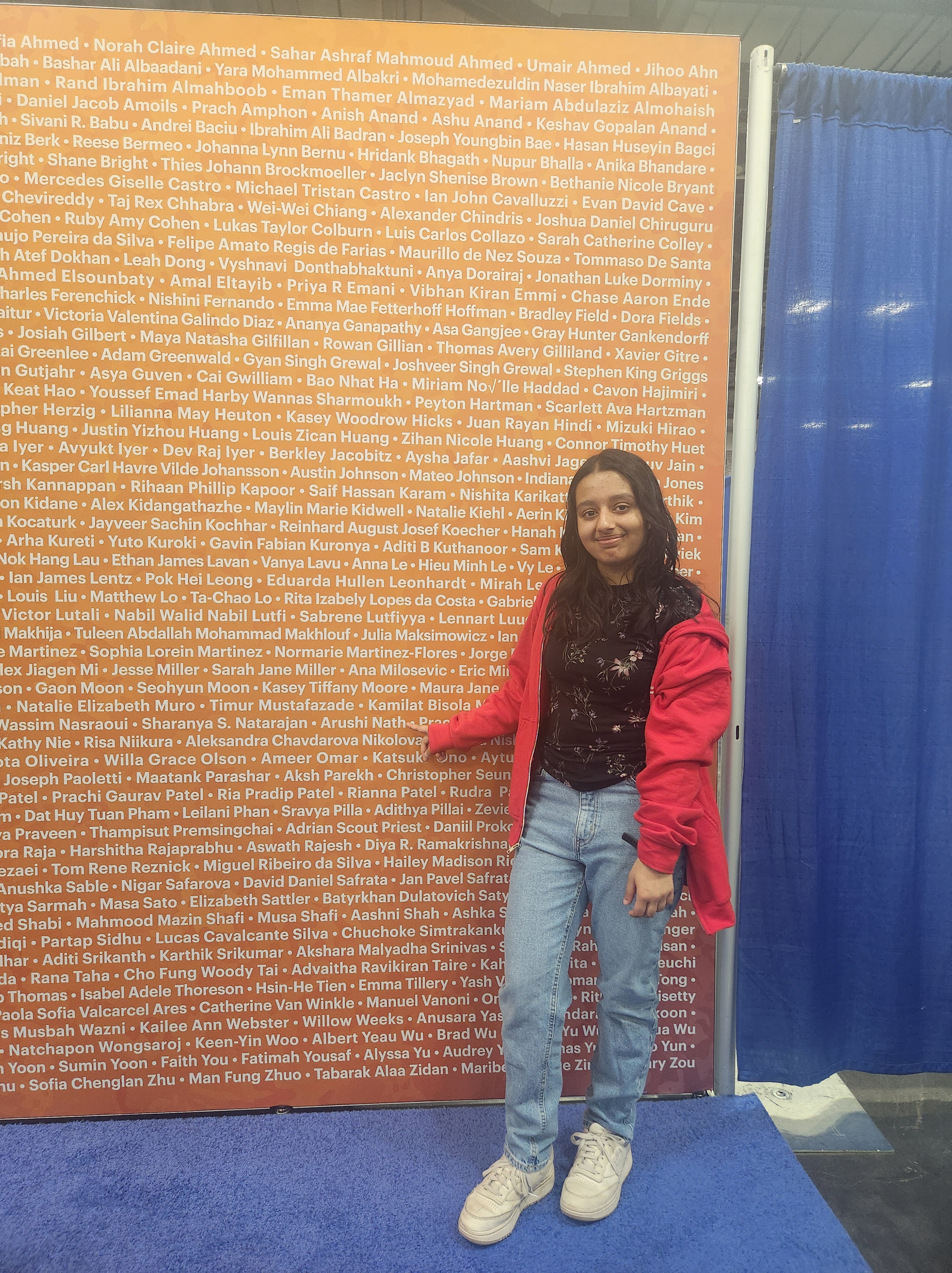
Our first day at ISEF was dedicated to setting up our project booths. The event took place at the Columbus Convention Center, conveniently connected directly to our hotel. After completing registration and receiving our name tags, we proceeded to the main hall to locate our designated booth sections based on our project categories. ISEF provided standard 48×48-inch poster boards along with header boards to display our projects. Since my poster exceeded the provided height, I stacked two trifold boards atop one another to accommodate my materials.
To finalize the setup, each project required approval from two display and safety inspectors, who verified compliance with all official guidelines and safety regulations.
In the evening, we participated in the lively pin exchange event. Finalists from around the globe brought pins, stickers, and small souvenirs symbolizing their hometowns and countries, which we eagerly exchanged. This tradition provided an exciting and enjoyable opportunity to meet and connect with fellow students from diverse cultural backgrounds.
Day 2: International Shout Out and Opening Ceremony
Each year, ISEF hosts a cultural showcase where participants from each country present a poster and short video highlighting their national identity. Together with two fellow Canadian finalists, we created a dynamic 5-7 second video capturing Canada’s unique spirit.
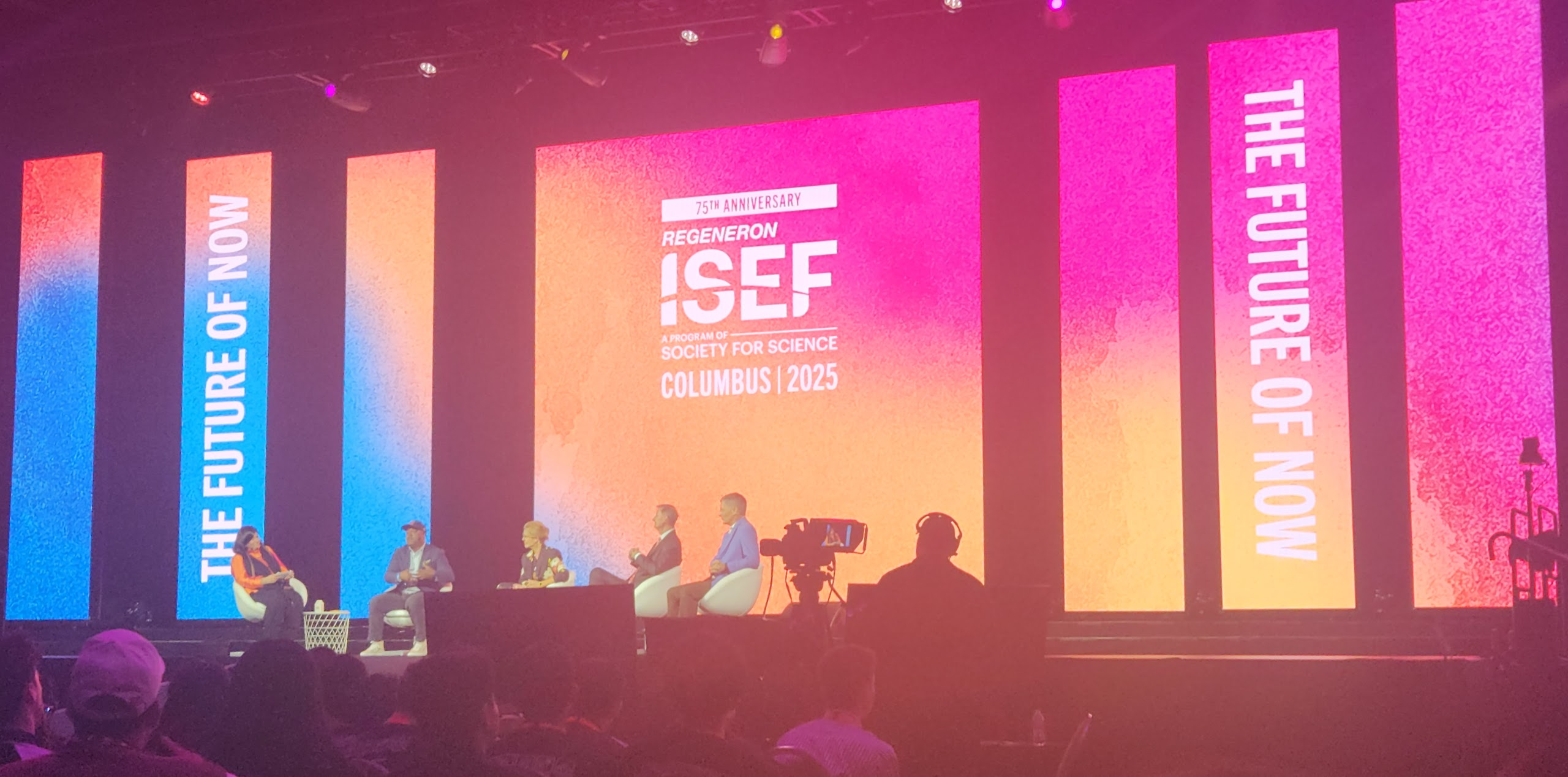
Throughout the day, various symposium sessions covered topics such as college applications, STEM outreach, creativity, and innovation. The evening’s opening ceremony marked the special milestone of ISEF’s 75th anniversary. We arrived early, securing excellent seats near the stage.
The ceremony began with a memorable recap video, highlighting the competition’s growth and significant impact over the decades. The event was hosted by Barb Baker and featured inspiring speeches from Maya Ajmera, President and CEO of the Society for Science and Publisher of Science News, and George D. Yancopoulos, co-founder and Chief Scientific Officer of Regeneron, who shared his personal journey and motivations for founding the company.
Following the speeches, a panel discussion took place, featuring distinguished leaders such as Frederick Berkely (President and CEO of COSI and CEO of the National Veterans Memorial and Museum), Jenny Britton (Founder of Jeni’s Splendid Ice Creams and CEO of Flora), Lewis Von Thaer (President and CEO of Battelle), and Ted Carter (President of Ohio State University and an ISEF alumnus). They emphasized the importance of STEM education, shared insights about aligning their professional work with public benefit, and provided valuable advice to aspiring young scientists.
The ceremony concluded with the International Shout Out, where each participating country was introduced individually. We proudly stepped onto the stage with our Canadian poster and presented our short video showcasing Canadian culture.
Team Canada selected for 2025 International Science and Engineering FairTeam Canada with Canadian poster and Flag
Day 3: Media Interviews and COSI Museum
The third day began early, with all finalists heading to their project booths for media interviews. Representatives from the Society for Science media, as well as external media outlets, visited various projects throughout the morning.
Afterward, we visited the Center of Science and Industry (COSI) museum. We enjoyed a variety of interactive exhibits and activities, including the High-wire Unicycle, speed and strength challenges, electric shock machines, and a motion simulator.
Following our museum visit, we returned to the hotel to relax and prepare for the judging scheduled for the next day.
Day 4: Judging and Finalist Mixer
We woke up early for judging, which was organized into two approximately three-hour sessions, separated by a lunch break. Upon arriving at our posters, we received a schedule listing our assigned judges and their time slots. Additionally, unexpected judges and special award judges could also visit at any time.
I had seven judges, with each judging session lasting 15 minutes. Some judges requested a brief presentation first, while others, having reviewed my project materials and poster beforehand, moved directly to questions. It was an amazing experience presenting my work to experts in astronomy and physics. I got questions ranging to my project’s inspiration to more technical inquiries regarding N-body integrators, machine learning setup, Bayesian inference processes, and associated uncertainties.
After judging concluded, we attended the finalist mixer, a relaxing event with a variety of foods and desserts. Activities included axe throwing, ping pong, inflatable obstacle courses, basketball, and a lively dance floor. The mixer provided a wonderful opportunity to socialize with finalists from other countries.
Panel discussion at the grand opening ceremony of the 75th Regeneron ISEF
Day 5: Public Outreach, Category Networking, North Market, and Special Award Ceremony
The fifth day was dedicated to public outreach, allowing students and families from Columbus and beyond to explore the projects. It also provided an excellent opportunity for us to visit other projects within our categories and learn more from our peers.
Later, we attended category networking sessions hosted by our respective category sponsors. My category, Physics and Astronomy, was sponsored by Jane Street. During our session, we engaged in solving complex puzzles collaboratively. The sponsor also provided fun merch like fidget toys, hats, and pins.
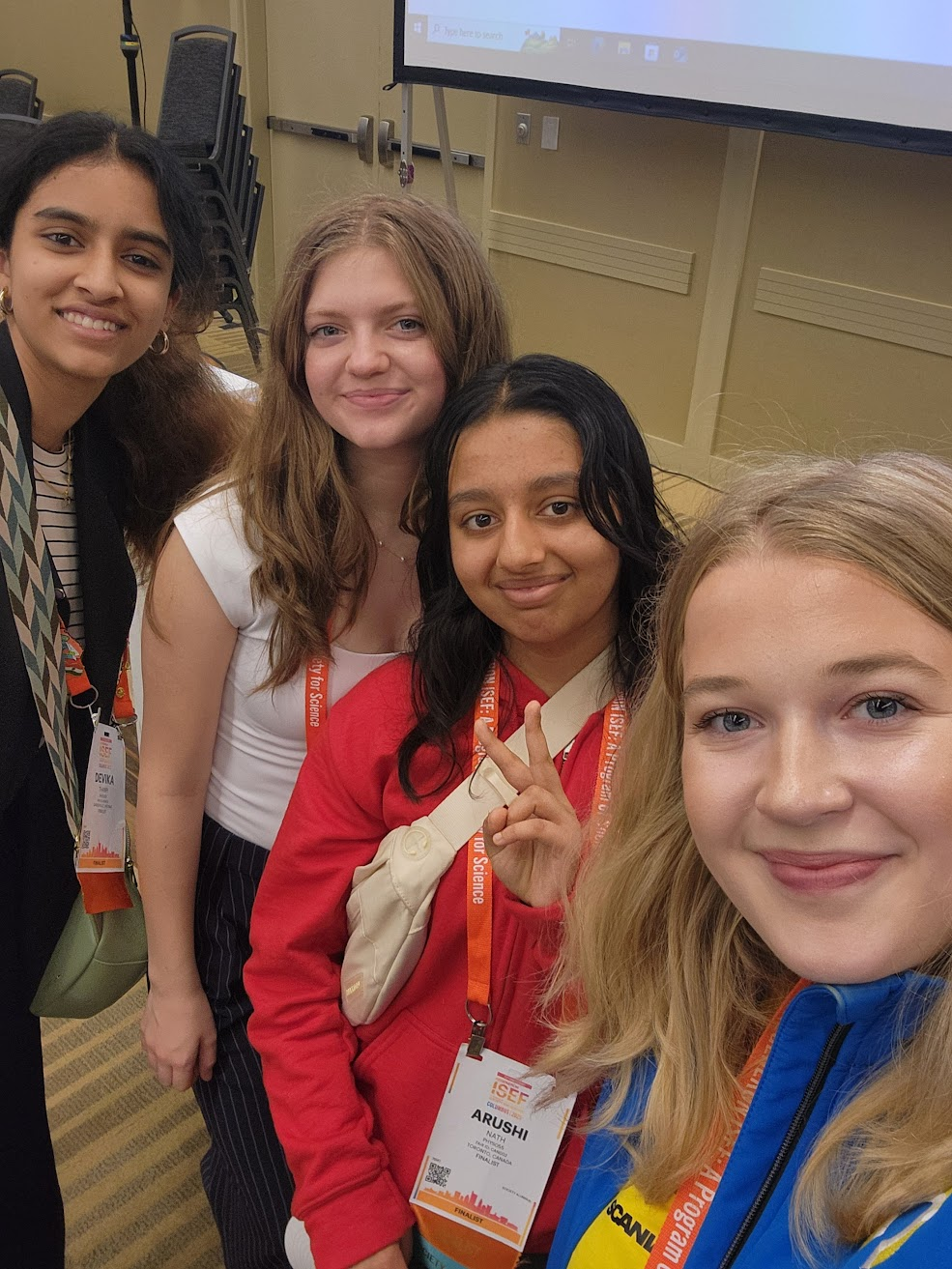
With ISEF finalists from Sweden and the United States at the Physics and Astronomy Mixer
In the afternoon, Team Canada visited North Market, a bustling public market featuring Ohio’s finest independent merchants, farmers, and makers. We explored various stalls and enjoyed lunch. The day concluded with the special awards ceremony at the convention center.
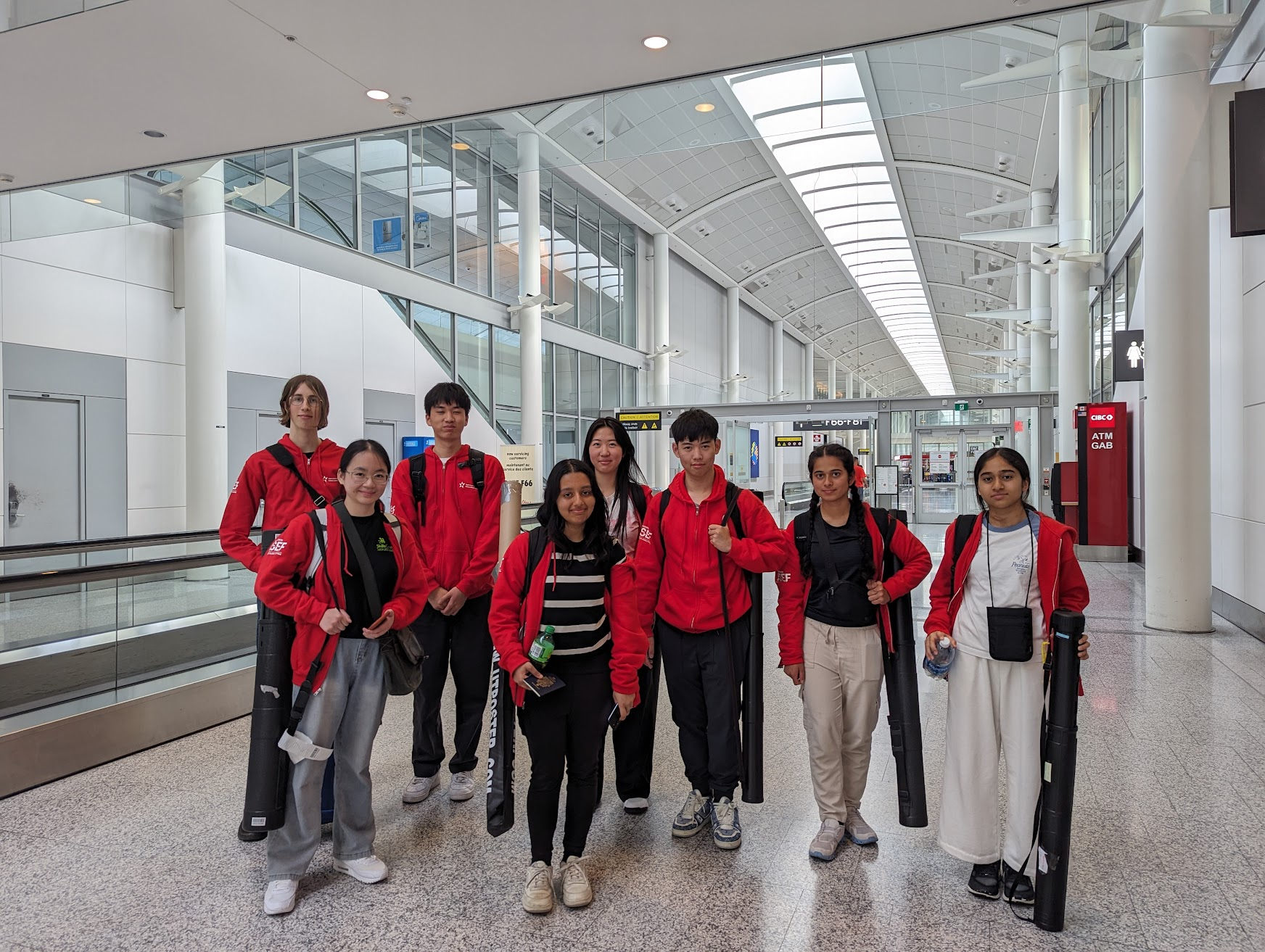
Team Canada at Toronto Pearson Airport preparing for their journey to the International Science and Engineering Fair
Day 6: Grand Award Ceremony and City Tour
The final day began early with the grand award ceremony. Awards were announced category by category, beginning with fourth, third, and second places, concluding with the first place and top awards. I was honored to receive the third grand award in my category.
Afterwards, Team Canada explored Columbus, visiting landmarks such as the Ohio Statehouse and the German Village Book Loft. We spent the evening packing and preparing for our early morning flight home the next day.
2025 Third Grand Award, International Science and Engineering Fair, USA. 2023 Second Prize Winner – European Union Contest for Young Scientists (EUCYS). Best of the Fair Award, Gold Medal, Top of the Category, Youth Can Innovate, and Excellence in Astronomy Awards at Canada Wide Science Fair 2023 and 2022. RISE 100 Global Winner, Silver Medal, International Science and Engineering Fair 2022, Gold Medal, Canada Wide Science Fair 2021, NASA SpaceApps Global 2020, Gold Medalist – IRIC North American Science Fair 2020, BMT Global Home STEM Challenge 2020. Micro:bit Challenge North America Runners Up 2020. NASA SpaceApps Toronto 2019, 2018, 2017, 2014. Imagining the Skies Award 2019. Jesse Ketchum Astronomy Award 2018. Hon. Mention at 2019 NASA Planetary Defense Conference. Emerald Code Grand Prize 2018. Canadian Space Apps 2017.





 HotPopRobot