Arushi Nath. March 7, 2026, was a special day for me. I received the Youth Leader Award at the 6th Annual Community Recognition Ceremony organized by the Member of Provincial […]
Arushi Nath.
March 7, 2026, was a special day for me. I received the Youth Leader Award at the 6th Annual Community Recognition Ceremony organized by the Member of Provincial Parliament Chris Glover for the Spadina – Fort York riding. Being recognized alongside 12 other community builders from my riding was meaningful for me in at least two ways.
First, it strengthened my belief that we all have civic and social responsibilities in our everyday lives to improve our community, including high school students like me who may be too young to vote.
Second, I enjoyed my social responsibilities as they aligned with my personal passion for the night sky. As a child, I spent countless Saturday mornings at the Ontario Science Centre, participated in space hackathons, attended guest lectures at the University of Toronto, and peered through telescopes at skywatch parties with the Royal Astronomical Society of Canada. And I remember asking a lot of questions that usually began with “Why?” Over the years, I built rovers, robots, and model rockets for school projects, taught myself Python, and showcased my work at street festivals, science marches, and in libraries.
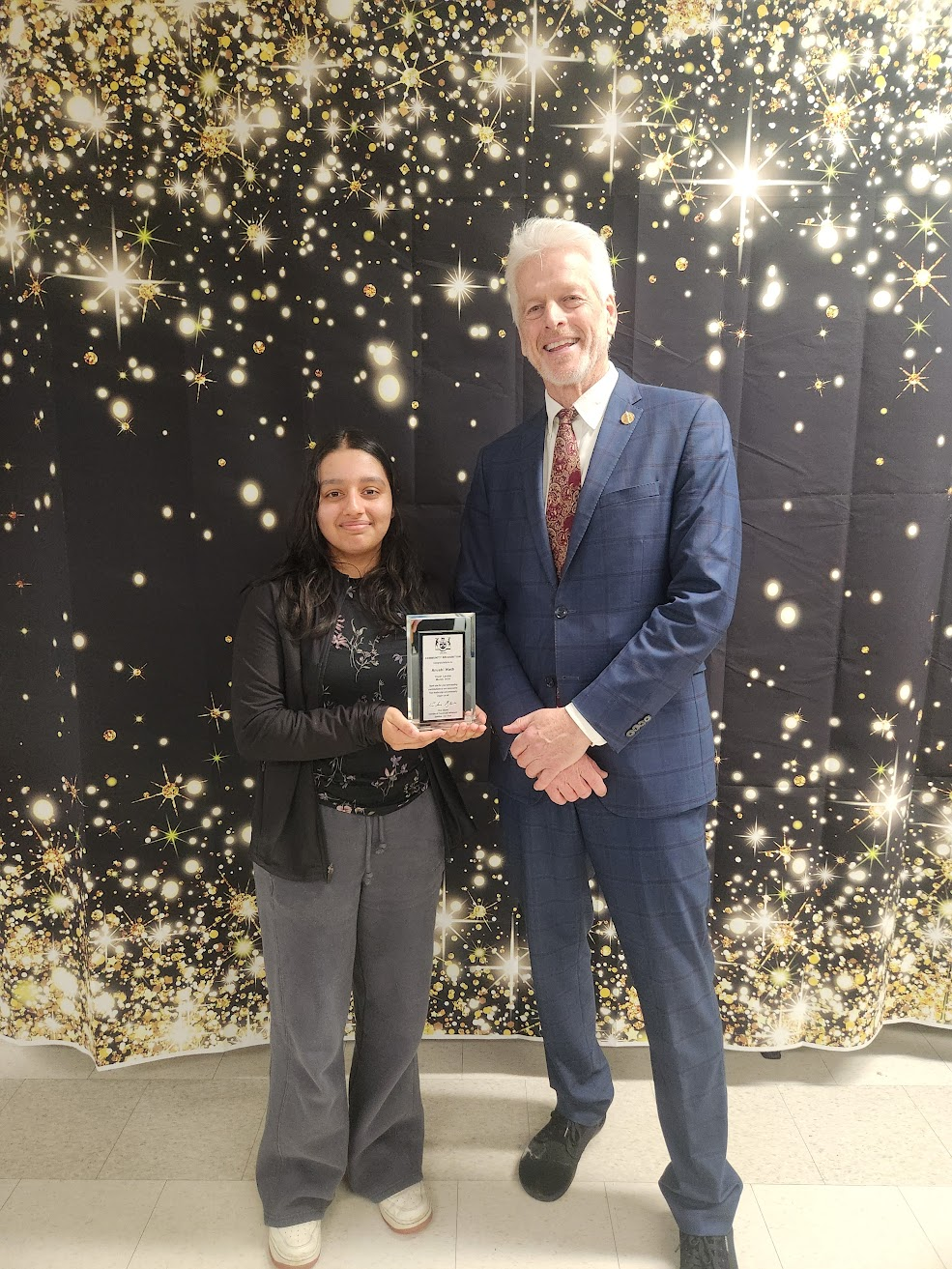
Receiving the 2026 Youth Leader Award from the Member of Provincial Parliament Chris Glover
In 2020, the doors of my school closed for the COVID-19 lockdown for a year and a half, but windows of online learning opened for me. Many space talks and conferences switched to Zoom, which made participating in them easier and free of charge. At one of the events which became online, namely the Planetary Defense Conference, I heard about the NASA DART Mission, where a spacecraft would be used to deflect an asteroid as a test for planetary defense. Scientists were calling on astronomers around the world to collect data about the asteroid to improve the baseline measurements. I found the call fascinating because it brought together robotics, astronomy, and the responsibility of scientists to protect Earth.
I was captured by the boldness of the mission, and was inspired by it. I began to wonder: could I, as a student, also contribute? I believed I could, but I needed to take a first step and get started. So I started getting familiar with open datasets from NASA and ESA, and writing to scientists and astronomers online on how to get access to telescopes. From these conversations, I learned about robotic telescopes and how students, too, are sometimes given access to them for specific research. I started filling out forms, writing project proposals to gain time on a network of robotic telescopes across Australia, Canada, Chile, Spain, and the USA. By joining online communities like Software Underground and the Minor Planet Forum, I got help developing my own open-source tools to find unknown asteroids and determine their physical properties. I ended up gathering 72 hours of astronomy data on Didymos before, during, and after the impact, and measured the impact of NASA’s DART mission on the Dimorphos asteroid system. That work earned me the Best Project Award at the Canada-Wide Science Fair in both 2022 and 2023, the first back-to-back winner since 1989-90 and the youngest ever, and 2nd place at the European Union Contest for Young Scientists in Brussels, with sole-authored peer-reviewed research published in Acta Astronautica at age 15 and co-authored research with 20+ NASA and international researchers in The Planetary Science Journal.
My science projects have always been built on crowdsourcing – drawing on the expertise of open communities, shared datasets, and collaborations with citizen observers across the globe. What I learned was simple: you can do meaningful work at any age, and the simplest way is to just start. In fact, once you make honest efforts to push your vision, more people and networks open up to support you. The same turned out to be true for civic life. You don’t need to wait until you are of voting age to have a voice in your neighbourhood, your city, or your province. When young people show up, they can draw support, and their voices start to matter.
So I started showing up. I campaigned during municipal and provincial elections for representatives whose values matched my own. I served as a Legislative Page at the Ontario Legislature, watching firsthand how provincial decisions reach into every classroom, transit stop, and street corner. I deputed at City Hall on transit reliability, the city budget, and RapidTO bus priority lanes on Bathurst Street, and took on a leadership role as Toronto Lead for More Transit Southern Ontario. I spoke at rallies at Queen’s Park, the seat of provincial government, opposing the closure of the Ontario Science Centre – the very place that first sparked my curiosity as a child – the destruction of the urban forest at Ontario Place, and cuts to education funding. I published letters to the editor in the Toronto Star national newspaper on road safety, green space, and equitable public investment, and gave interviews with CBC, CTV, and CityNews.
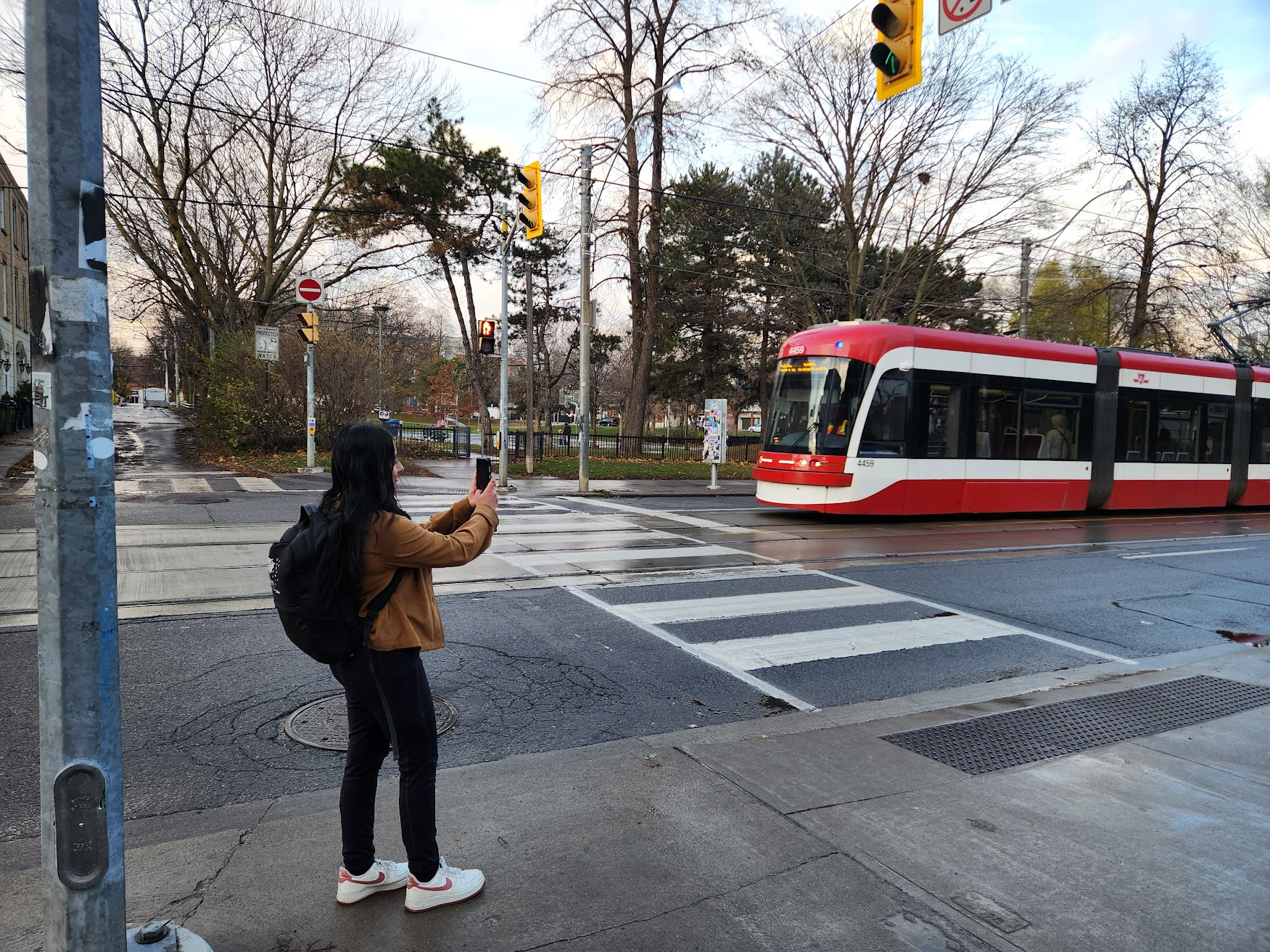
Testing my BetterMyCity App
The more I showed up at events aimed at improving local governance, the more I saw the same problem – data existed, but it wasn’t accessible to young people. I eventually realized I could also draw on my expertise in planetary defense to improve civic life closer to home. That led me to build BetterMyCity.com App using the same principles of open data and civic technology that shaped my planetary defence work, but directed at my own city. Using Toronto’s open 311 data, AI image classification, and ward datasets, the platform makes civic reporting accessible to high schoolers. A student spots a faded crosswalk, snaps a photo, and the app generates a structured municipal report in under 60 seconds for filing. It also shows young people how to escalate further by writing a letter to the editor, contacting their locally elected Councillor, or deputing at City Hall. It is open science, applied not to the cosmos, but to the streets leading to our schools, parks, and community centres. The platform has helped generate over 75 reports across Toronto, won top prize at the City of Toronto’s PROGRAM:TO Hackathon, and earned 2nd Place at the City of Toronto Open Data Awards.
None of this happened in a single moment. It has been years of showing up at City Hall, at Queen’s Park, at rallies, volunteering with local organizations, and doing campaigning and street outreach. Receiving this recognition from MPP Chris Glover, a prominent voice in our community and someone who has consistently championed transit, education, science, and democratic accountability at Queen’s Park, will keep me encouraged to use open data and technology for the public good. This award affirms what I have believed since those early mornings at the Science Centre: that curiosity, open data, and persistence can make things better – on a planetary scale, and on ours.
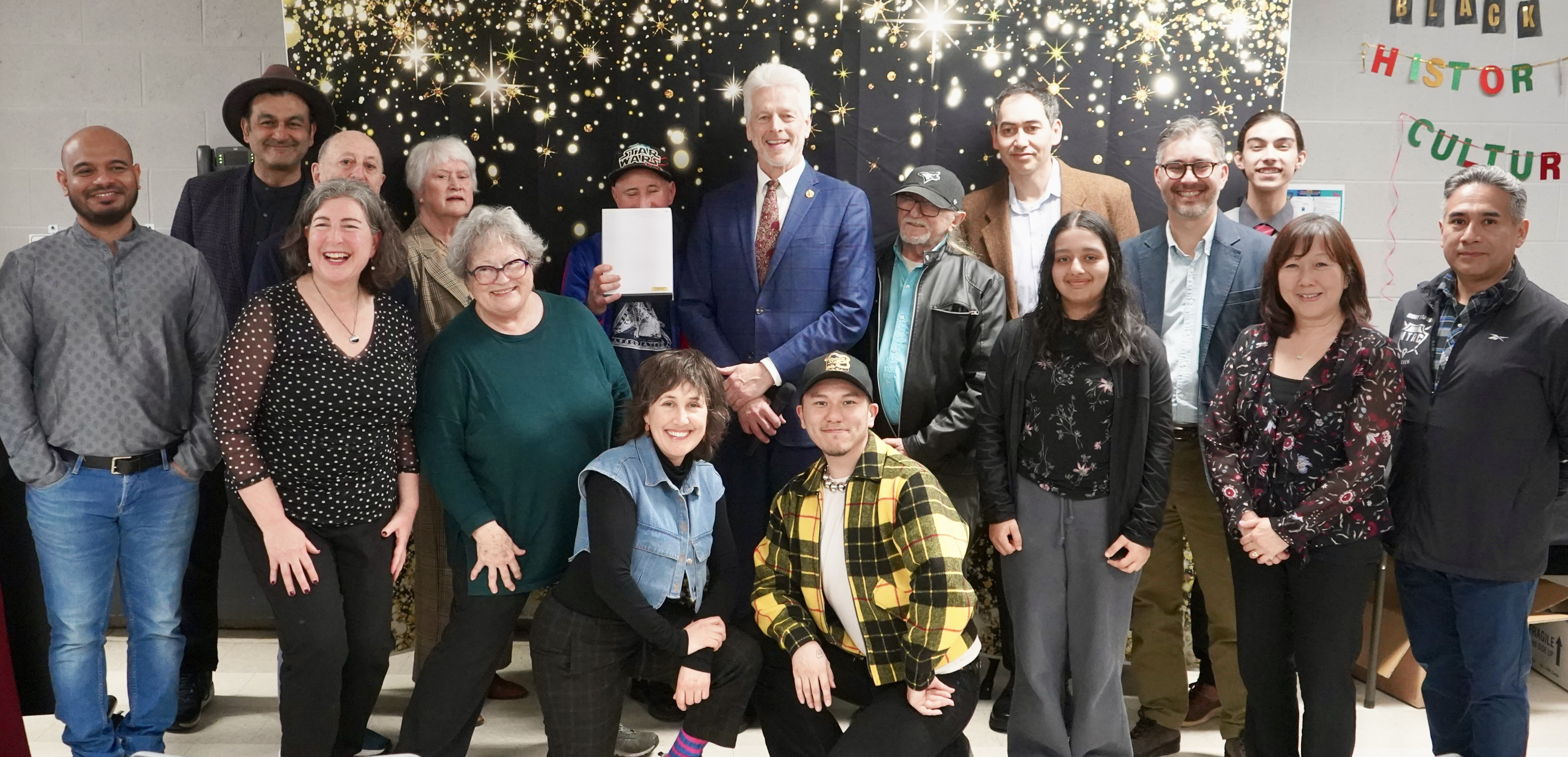
Group photograph with other Community Award Winners
Thank you to MPP Glover, to the Spadina-Fort York community, and to everyone who has supported this work. I’m just getting started.
2025 Third Grand Award, International Science and Engineering Fair, USA. 2023 Second Prize Winner – European Union Contest for Young Scientists (EUCYS). Best of the Fair Award, Gold Medal, Top of the Category, Youth Can Innovate, and Excellence in Astronomy Awards at Canada Wide Science Fair 2023 and 2022. RISE 100 Global Winner, Silver Medal, International Science and Engineering Fair 2022, Gold Medal, Canada Wide Science Fair 2021, NASA SpaceApps Global 2020, Gold Medalist – IRIC North American Science Fair 2020, BMT Global Home STEM Challenge 2020. Micro:bit Challenge North America Runners Up 2020. NASA SpaceApps Toronto 2019, 2018, 2017, 2014. Imagining the Skies Award 2019. Jesse Ketchum Astronomy Award 2018. Hon. Mention at 2019 NASA Planetary Defense Conference. Emerald Code Grand Prize 2018. Canadian Space Apps 2017.




 HotPopRobot