Arushi Nath The PROGRAM: Toronto Hackathon took place on June 20, 2025, at Toronto City Hall (Committee Room 2), on the eve of the inaugural Toronto Tech Week. Organized in […]
Arushi Nath
The PROGRAM: Toronto Hackathon took place on June 20, 2025, at Toronto City Hall (Committee Room 2), on the eve of the inaugural Toronto Tech Week. Organized in collaboration with the City of Toronto Open Data team, the hackathon challenged participants to help make Toronto the world’s most programmable city. It was open to designers, developers, and anyone eager to build applications using Toronto’s open data infrastructure to inform, connect, and empower communities in new ways.
There was an enthusiastic turnout with over 60 participants! The event kicked off with organizers Tarun Sachdeva and Sergiy Dybskiy delivering land acknowledgments, welcoming attendees, and speaking about the upcoming events for Toronto Tech Week as well as the monthly Civic Tech Toronto meetups they host. They acknowledged the support of city staff, generous sponsors, and the three judges of the hackathon.
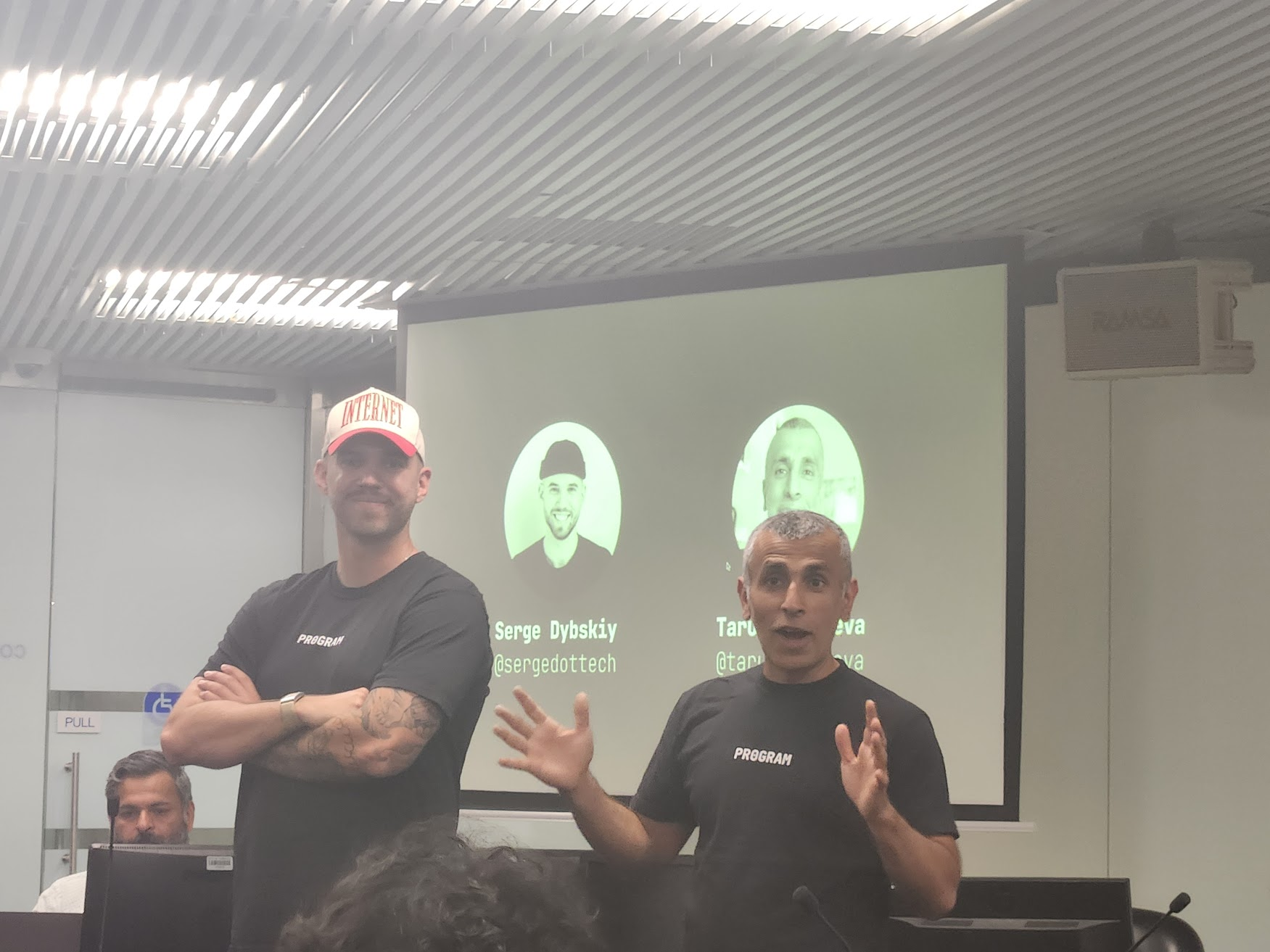
Organizers Sergiy Dybskiy and Tarun Sachdeva welcome participants at the Hackathon
The rules of the event were simple: each team could build any project as long as it used open data collected by the City of Toronto. After the introductions, team formation began. While some people arrived with teammates, others pitched ideas on the spot and quickly formed groups. In total, 29 teams were ready to build.
The Idea Behind Better My City
I have always believed that technology can be a powerful force for public good. That belief—combined with my passion for Artificial Intelligence and big data—inspired me to create a project focused on a challenge I face every day: unsafe commutes for school youths like me.
Thousands of students across Toronto walk, bike, or take transit to school. Along the way, we encounter real hazards—faded crosswalks, broken pedestrian signals, overflowing trash bins, blocked sidewalks, and more. These are not minor inconveniences; they’re safety risks that affect people of all ages and abilities and diminish the quality of life in our public spaces.
Too often, these problems are overlooked. We assume someone else will report them. But what if there was an easy, empowering way to document and report these issues—using a tool most of us already carry in our pockets?
That question led to the creation of Better My City.
How Better My City Works
Better My City is an app powered by AI and open data. Users take a photo of a civic issue—such as a blocked sidewalk or a malfunctioning traffic signal—and the app uses image recognition to identify the problem. It extracts the location and timestamp from the photo’s metadata, then cross-references the issue with historical trends from the 311 Service Requests – Customer Initiated dataset on Toronto’s Open Data portal.
For example, a photo of a trash can might match patterns of overflowing garbage in that neighborhood, while a crosswalk might trigger a predicted complaint about faded paint. The app then drafts a suggested complaint, which the user can review and send—currently via Twitter to @311Toronto.
It’s like having a personal assistant that transforms citizen observations into actionable civic reports. And the best part? It already works. A trial version of the app, tested by friends in different neighborhoods, successfully reported issues that have since been fixed—walk signals were restored, crosswalks were repainted, and garbage was removed. These small but important wins show the power of real-time citizen engagement.
The Hackathon Experience
After several hours of building—with support from the City of Toronto Open Data team and helpful conversations with fellow participants—it was time for the presentations. Each team had three minutes to present their project to the panel of judges.
I was proud to present Better My City, sharing why I built it, how it works, the open data that powers it, and the real-world impact it’s already had. I even gave a quick live demo to show how a simple photo could trigger a city complaint in seconds.
What stood out most during the hackathon was the incredible variety of thoughtful and creative solutions presented by other participants. The room was full of energy, innovation, and purpose. It was clear to me that open data isn’t just a resource—it’s a launchpad for building better communities.
Participants coding and collaborating on their projects
In a tech world that often emphasizes profit-driven startups, this event reminded me that some of the most meaningful innovation comes from building tools that benefit everyone.
Winning and What’s Next
When the winners were announced, I was thrilled to hear Better My City named the First Prize Winner. It was a moment of recognition not just for the work I put in, but for the idea that youth-led civic tech can have real and lasting impact.
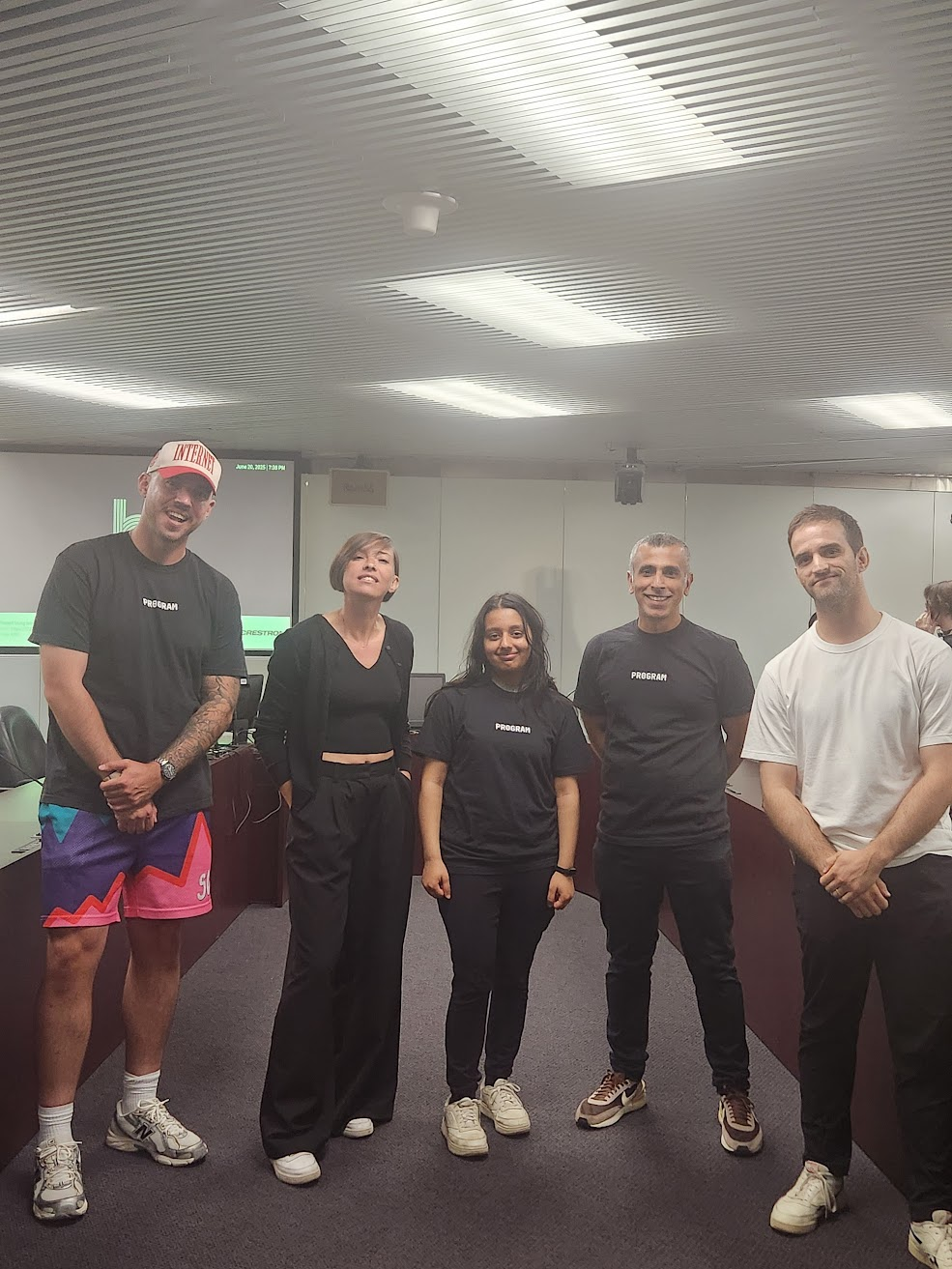
Picture with Sergiy (Organizer), Serena (1RG Labs), Tarun (Organizer), and Mackenzie (City of Toronto Open Data)
The win came with a $500 prize, which will go toward further developing and refining the idea. Even more exciting, as the winner, I would have an opportunity to present the project at the next AI Tinkerers event, where I hope to connect with fellow innovators, gather feedback, and explore future collaborations.
Final Thoughts
I’m incredibly grateful to the organizers, the City of Toronto Open Data team, the judges, and all the participants for creating such an energizing and welcoming event. The PROGRAM: Toronto Hackathon showed me what’s possible when we come together to build solutions that put people first.
Cities are a shared responsibility. We can choose to ignore problems—or we can be part of the solution. For me, Better My City is a small but meaningful step in choosing action, and I hope it inspires others to do the same.
2025 Third Grand Award, International Science and Engineering Fair, USA. 2023 Second Prize Winner – European Union Contest for Young Scientists (EUCYS). Best of the Fair Award, Gold Medal, Top of the Category, Youth Can Innovate, and Excellence in Astronomy Awards at Canada Wide Science Fair 2023 and 2022. RISE 100 Global Winner, Silver Medal, International Science and Engineering Fair 2022, Gold Medal, Canada Wide Science Fair 2021, NASA SpaceApps Global 2020, Gold Medalist – IRIC North American Science Fair 2020, BMT Global Home STEM Challenge 2020. Micro:bit Challenge North America Runners Up 2020. NASA SpaceApps Toronto 2019, 2018, 2017, 2014. Imagining the Skies Award 2019. Jesse Ketchum Astronomy Award 2018. Hon. Mention at 2019 NASA Planetary Defense Conference. Emerald Code Grand Prize 2018. Canadian Space Apps 2017.





 HotPopRobot