Artash Nath I was very excited to be selected as a participant for The Knowledge Society Summit (TKS) held in Toronto on 12 May 2018. And I was prepared well […]
Artash Nath
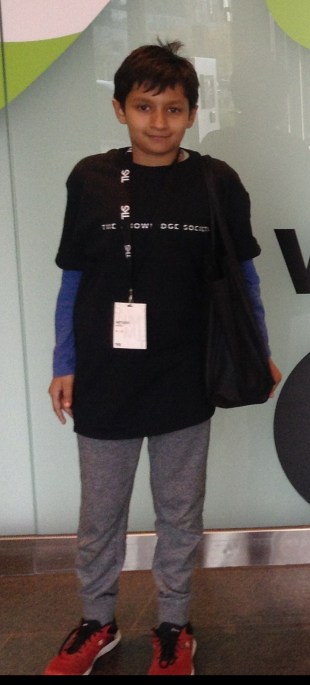
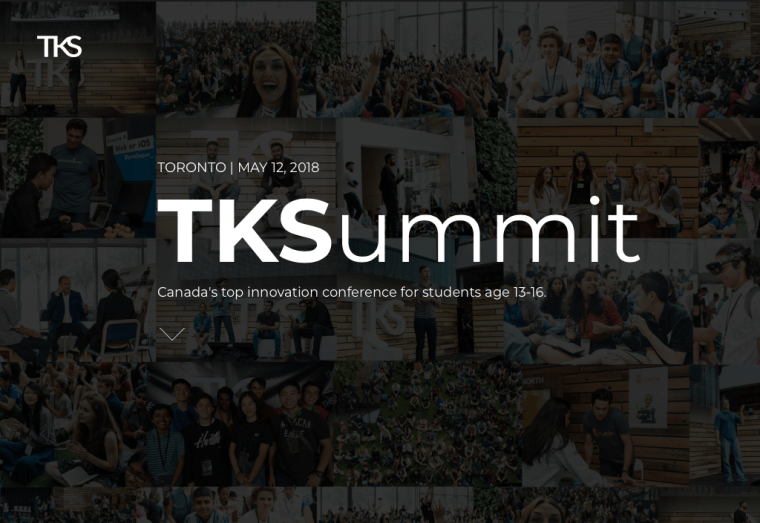
I was very excited to be selected as a participant for The Knowledge Society Summit (TKS) held in Toronto on 12 May 2018. And I was prepared well for it.
I had written a few articles on the Slack platform of the Summit about my learnings from the two public lectures I had previously listened to. The first lecture was by Roger Melko from the Perimeter Institute on the limits of physical computing and how they can be overcome by quantum computing and Artificial Intelligence (AI). The second lecture, by George Stein from the University of Toronto, was about cosmic simulations. As the Universe is characterized by huge timescales and physical distances, simulations are a useful tool to model the universe. Cosmic simulations allow us to better understand what happened in the past and make predictions about the future. And AI can speed up these simulations without exceeding the physical limits to computing.
I was pleased that my contributions to the Slack channel of the TKS Summit were recognized by the organizers – I was announced as one of the participants who made a positive impact on discussions happening prior to the conference.
Artash amongst TKS Slack Channel Impact winners
I attended all the presentations. As I am interested in space and robotics, my mind was constantly trying to link new information I was gaining with how I could apply them to space and robotics sector.
The presentation by Alan Smithson from MetaVRse was on Virtual Reality (VR) and Augmented Reality (AR) and what the world would look like in the future with these technologies. As I am interested in space and robotics, I immediately thought about some possible applications of VR and AR on training astronauts (especially so, as we are moving in the direction of private space exploration and demands for such simulations would be higher) and virtually simulating how planetary Rovers can navigate craters, gullies, and even caves.
The presentation by Maheen and Katya from Oculus was on using VR to be able to talk to other people in a virtual setting. An application for this technology could be in cosmic simulations. It would allow us to visually experience how gas and dust cloud came together to form galaxies, stars, and planets – and will be a useful addition to modeling our Universe mathematically.
The presentations by Alan Si from Facebook and Ozge Yeloglue were about machine learning algorithms. I got a better grasp about image processing using machine algorithm when Alan Si demonstrated the concept by bringing volunteers on the stage. I have already used machine learning in one of my space projects, Space-Rex, which predicts asteroid collisions using data from the NASA Near Earth Objects database. More details at https://hotpoprobot.com/2018/03/06/space-rex-predict-risk-index-of-asteroid-collision-using-a-i-and-display-the-data-musically-in-10-steps-and-40-hours/ Now I got some more ideas on how to improve it further and newer tools I can integrate it with.
The presentation by Manan Arya from NASA was very interesting and I was looking forward to it. It was about how Origami technique is used to fold radars for Cube Sats and Solar Sails. And this technique would be used in the Starshade project where a giant, flower-shaped starshade would be unfolded to create an artificial eclipse to see distant exoplanets. When humans start traveling farther into space, everything will have to be squeezed into a small volume and Origami would play a key role. It also reminded me of the International Space Development Conference (2016) in Puerto Rico where they introduced the Star Shot Breakthrough Initiative to propel nano spacecraft with big sails to the nearest star (Alpha Centauri) in around 20 years.
2025 Third Grand Award, International Science and Engineering Fair, USA. 2023 Second Prize Winner – European Union Contest for Young Scientists (EUCYS). Best of the Fair Award, Gold Medal, Top of the Category, Youth Can Innovate, and Excellence in Astronomy Awards at Canada Wide Science Fair 2023 and 2022. RISE 100 Global Winner, Silver Medal, International Science and Engineering Fair 2022, Gold Medal, Canada Wide Science Fair 2021, NASA SpaceApps Global 2020, Gold Medalist – IRIC North American Science Fair 2020, BMT Global Home STEM Challenge 2020. Micro:bit Challenge North America Runners Up 2020. NASA SpaceApps Toronto 2019, 2018, 2017, 2014. Imagining the Skies Award 2019. Jesse Ketchum Astronomy Award 2018. Hon. Mention at 2019 NASA Planetary Defense Conference. Emerald Code Grand Prize 2018. Canadian Space Apps 2017.

 I was very excited to be selected as a participant for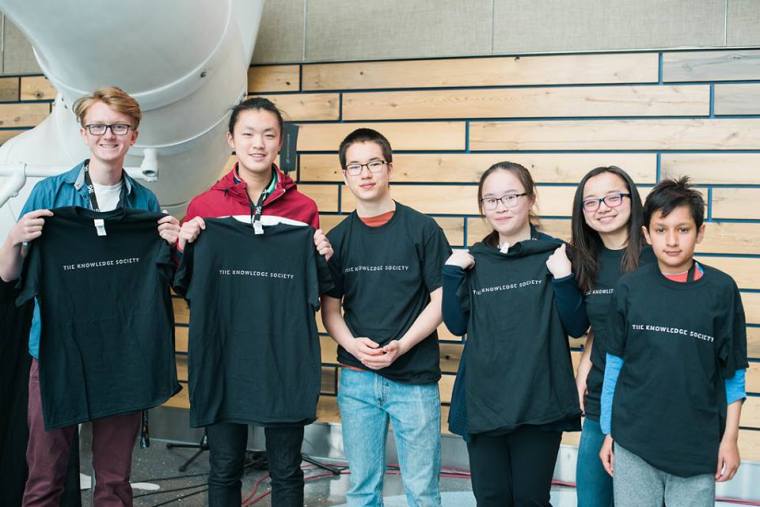



 HotPopRobot