Arushi Nath. Grade 9. Toronto Predictable, stable, and adequate funding is essential for city governments to produce public goods and services we enjoy daily, from picking up garbage to public […]
Arushi Nath. Grade 9. Toronto
Predictable, stable, and adequate funding is essential for city governments to produce public goods and services we enjoy daily, from picking up garbage to public parks, shelters, welfare and recreational programmes, and public transit. The funding should be determined by our vision and the standards of services that cities should provide to keep the cities functioning, make the lives of people affordable, and meet fundamental human rights, social welfare, equity, and environmental considerations.
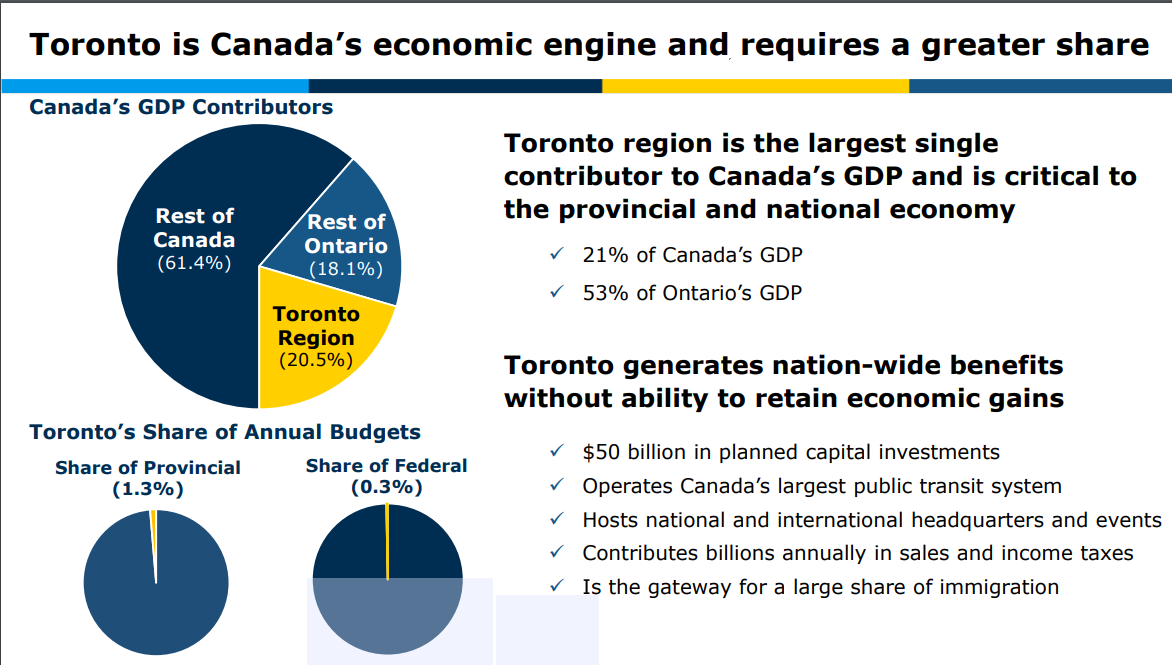
Being a creation of the province of Ontario, the City of Toronto is not given the right to charge service tax to raise revenues. Instead, it can only raise revenues via property taxes and user fees for services it offers, such as water, sewage, parking, transit, or city-run swimming programmes.
Toronto Also Has a Revenue Problem
This creates the issue of how Toronto as a city can raise funds? Cities are engines of growth and innovation. This is where people gravitate to work and live. Cities also see a high influx of refugees and immigrants whose housing and public services demand needs to be rightly met. A large portion of the Toronto public service users are also the transient population that may work in the city but do not live here, and therefore the city cannot charge property tax to them but has to provide services to them. However, the limited tools available to cities to raise funds are not enough to meet the demands of the growing number of service users.
Even a school student can see that there is a mismatch between the public services the City of Toronto is tasked to provide and the tools it has to raise revenues to pay for them.
The City of Toronto is frantically searching for mechanisms to raise revenues to fund essential public services such as public transit, shelters, and affordable housing. All these services have already seen cuts in their funding which has negatively affected its users. Public services funded through tax dollars may seem burdensome, but these services make our cities affordable, equitable, accessible and climate-proof. The cost of providing these public services individually would be costlier or impossible. For instance, the cost of having a private emergency concierge would be way more than the public-funded 911 service. And no city of the size of Toronto can function without public transit. The environmental and financial costs of individual car ownership would be enormous.
In Addition to a Spending Problem
Toronto also has a spending problem as decades of former Mayors who failed to stand up for the common people of Toronto misallocated scarce financial resources. They made no efforts to reign in police budgets or say no to rebuilding the Gardiner elevated expressway, which will cost the City of Toronto over $1.2 billion. Corporate lobbying has also effectively put corporate interests over public interests, leading to further misallocation of resources. The secretive deal to host the 2026 FIFA World Cup has an estimated cost of $300 million, with the city expected to chip in around $90 million. I remember how former Mayor Tory and his corporate ties to Rogers put an end to a very successful ActiveTO that brought people without backyards or cottages out to enjoy our own city, strengthen the community, and patronize local businesses.
It is important that all citizens’ views, especially those most dependent on public goods and services and those who cannot vote, such as youths and immigrants, are included in the planning processes on how cities can raise revenue to fund public services.
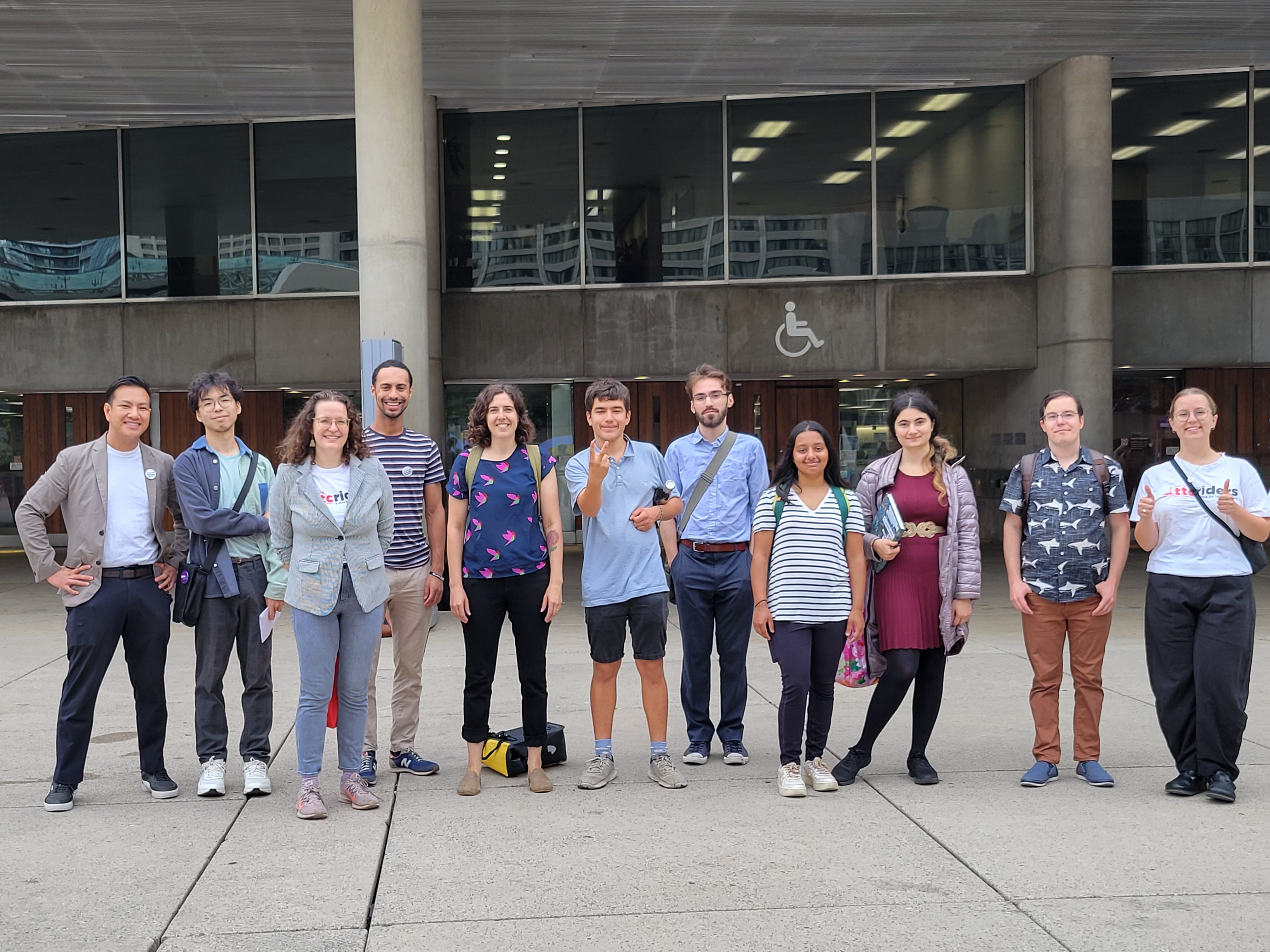
With TTC Riders Group of Deputants
Executive Committee Meeting for Long-Term Financial Plan
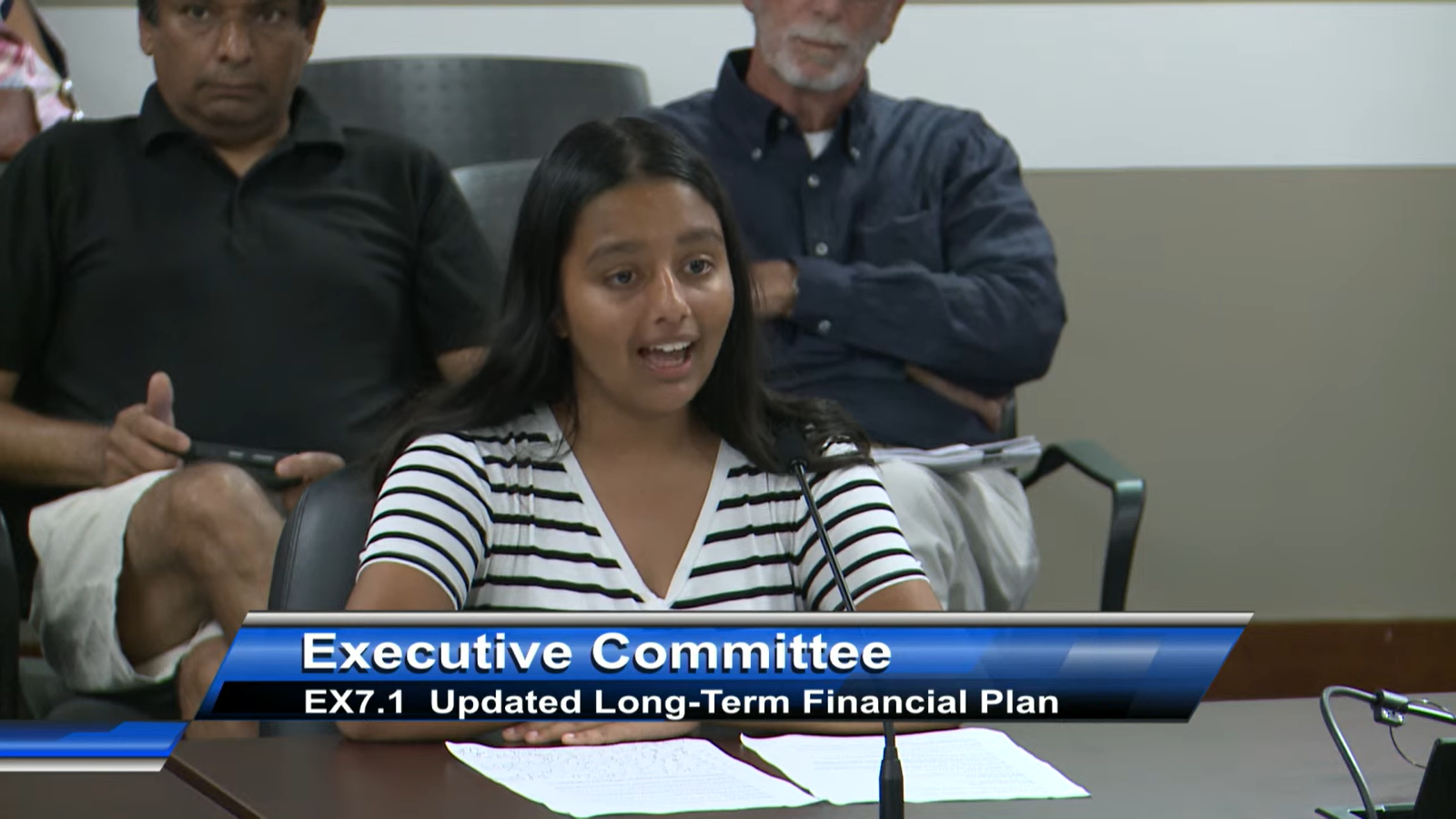
With this perspective in mind, I registered myself with the Executive Committee – Meeting 7 of the City of Toronto to give a “Depute.” The Executive Committee’s primary focus is to provide strategic oversight of City matters and to monitor and make recommendations on the priorities, plans, international and intergovernmental relations, and the financial integrity of the City. The purpose of the meeting was to consider a report from the City Manager on the long-term financial plan.
As this meeting was called upon as a special session by Mayor Olivia Chow on 24 August 2023 during the school summer holidays, it was possible for me to give the “Depute” in person.
TTC Riders Group
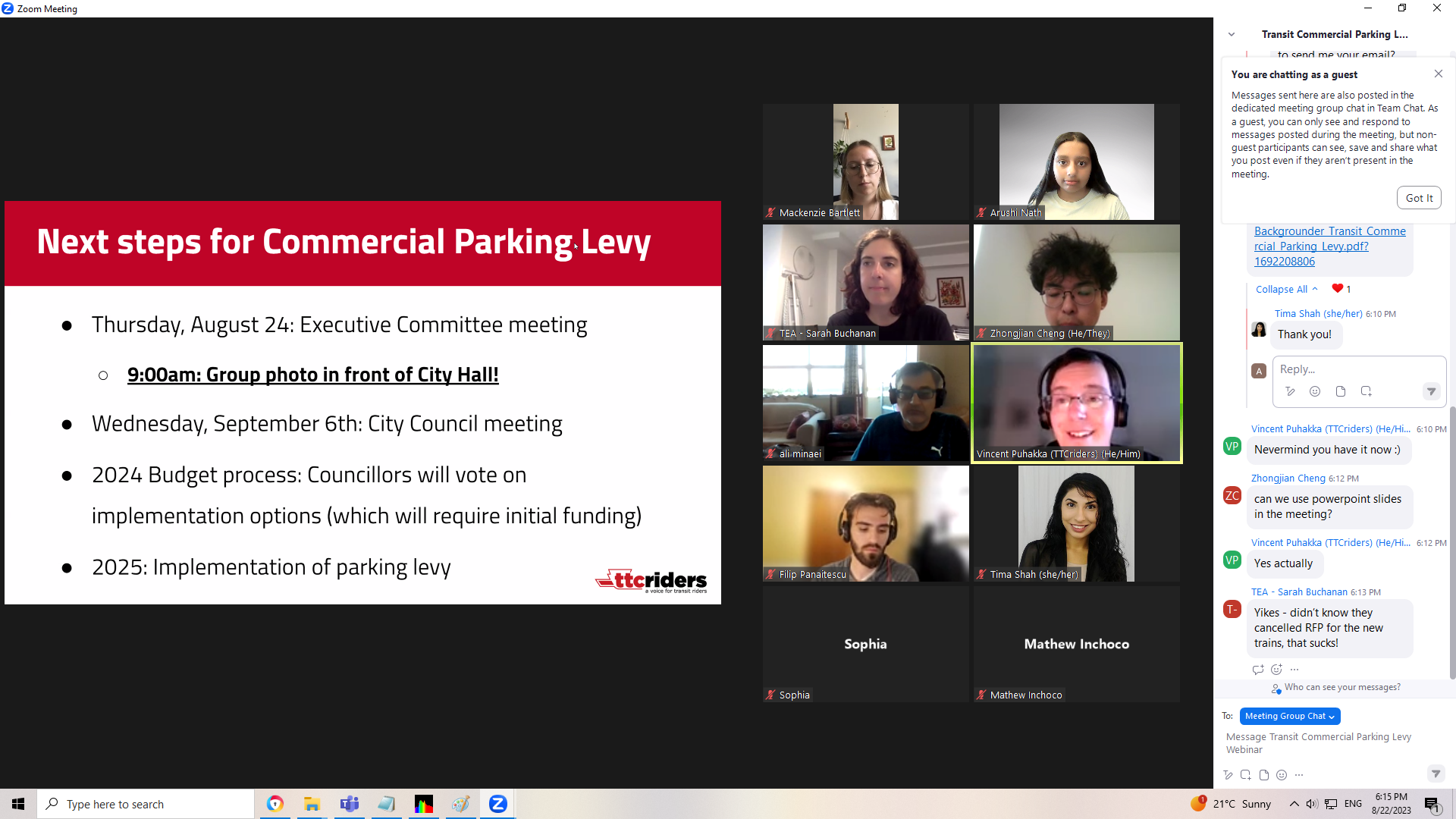
I thank the TTC Riders group for informing me of this Committee Meeting and arranging an Information and Training Session for those giving Depute a few days prior to the meeting. I attended the training session, and it was wonderful to meet many colleagues from TTC Riders at the City of Toronto on the day of the depute.
Training by TTC Riders Group – join them!
Rich Province. Poor City
Reading the report produced by the city manager and watching their presentation, it was clear that the issue of the need to raise revenue was a dire one, and elected representatives of Toronto will have to show courage, ingenuity and tough bargaining with provincial and federal governments to keep Toronto functioning, affordable, and be a city for everyone.
Why is the province of Ontario sitting on a huge budget surplus while the municipalities are running out of money – Toronto has to keep cutting services and keep saying “no” to even the most basic needs, such as safer street intersections?
How did we reach this point where we let the city of Toronto go into decline, unable to keep our park washrooms open in winter, pick up trash more frequently, open shelters, or invest in public housing?
Why did the previous City Mayor and Councillors not have the courage to raise this issue repeatedly at the top of their voices? Instead, they simply let the city go into decline, closing shelters, cutting transit, and stripping down city-run youth, recreational and social welfare programmes?
I wish I could have all the answers to as to why this is happening and how to reverse them – as cuts to public services have intergenerational impacts, and many of us who will be affected by these decisions cannot even vote. So I was happy to use my voice to raise the concerns of many.
With Mayor Olivia Chow at the end of the Committee Meeting. The atmosphere for Deputants at the City Hall has changed to become more friendly, engaging and conversational.
My Depute:
Cuts in Transit are Barriers to Education. Say Yes to Commercial Parking Levy and Other Revenue Ideas
Hello! I am Arushi Nath, a Grade 9 student from Toronto.
September 5 is almost here!
It is the back-to-school day for over 300,000 students in Toronto.
It means:
Back to meeting your friends.
Back to seeing your teachers.
Back-to-school lunches
And, back to after-school activities
But it also means.
Back to the unreliable TTC
Back to the crowded TTC
Back to the reduced TTC
And back to being in delayed streetcars and buses blocked by cars.
Public Transit is a lifeline for students. Cuts in transit hinder:
Our ability to be in School on time.
Our ability to pursue after-school sports and academic activities.
I won the Canada-wide Science Fair in 2023 and 2022, becoming the youngest and first back-to-back winner in 33 years. I will represent Canada at the European Union finals in Brussels next month. However, being entirely dependent on public Transit to access resources across Toronto, such as the Ontario Science Centre, the University of Toronto – Scarborough campus, or the Bayview Village, meant spending more time in Transit to achieve the same results or sometimes giving up on opportunities.
Transit cuts are barriers to education, and students and society pay the price. We need to reverse these cuts and expand transit services. Levies on commercial parking is one way to proceed. There are three reasons for this:
First, large profitable corporations like shopping malls should pay for commercial parking.
It brings customers in cars conveniently to their stores at the expense of congestion and delays that transit users must bear.
Second, the levy would bring a much-needed correction in how we value land resources in Toronto.
Moving cars that carry 60-90 people, also called buses or street cars, do not get their dedicated bus lanes.
Yet commercial parking owners can host stationary cars in dedicated parking spots for the whole day at no cost. This is not fair.
Third, the evacuation of the City of Yellowknife and the decline in air quality because of wildfires across Canada point to the urgent need for climate-proofing in Toronto.
We need more parks and not parking lots to mitigate and adapt to climate change. Commercial parking levies would shift consumer habits towards using and advocating for accessible, reliable, and expanded public Transit. Toronto should take advantage of this opportunity to raise revenue. Even at the lower end and while maintaining equity considerations, it can raise over 100 million dollars annually.
I have one more suggestion. The safety of Toronto students should be the City of Toronto’s responsibility. I invite you to take the Streetcar to my school from 7 am – 8 am in the morning and between 2 pm – 4pm in the afternoon. You will find find streetcars have become school buses because of the number of students using them. The fine for passing a school bus can be up to 2000 dollars.
If we start to fine cars for passing open doors to streetcars just during that time, we could generate 1 million dollars a day (Assuming 10 streetcar lines, 1 street car every 10 minutes, and 3 incidences per trip). Assuming a school year is only 9 months, this is almost 300 million dollars per school year. This will generate revenue for the much-needed public transit.
More importantly, it will ensure that students do not just go back to school but also come back home safely.
Thank you.
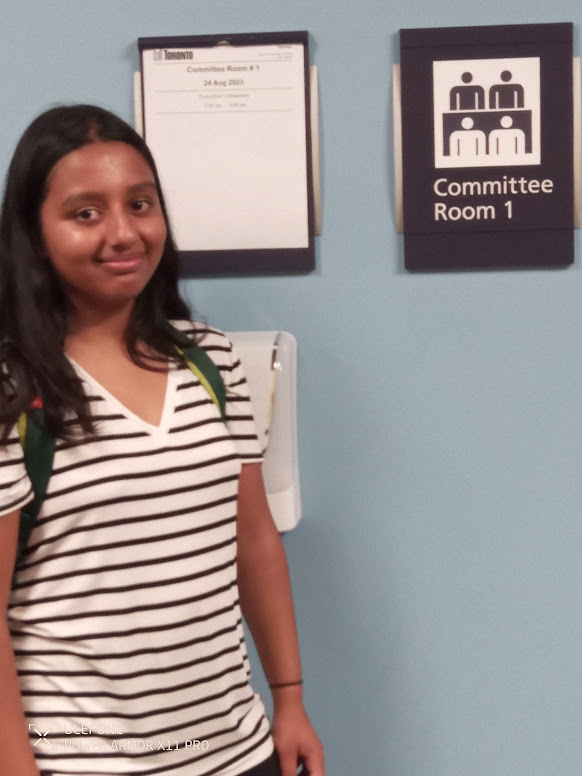
The depute happened in Committee Room 1, City of Toronto.
Deputations done. Shoutout to high school student Arushi Nath who impressed the room by pointing out the city could make some nice revenue by actually enforcing traffic laws against drivers who zoom by open streetcar doors.
After 9th grader Arushi Nath gives an eloquent deputation on the state of transit in the city, Mayor Chow tells her that whatever high school she's going to in September is blessed to have her.
Grade 9 student Arushi Nath is speaking to the Executive Committee in support of a commercial parking levy to fund #TTC. "It's almost September 5th. Back to school… and back to unreliable TTC. Transit cuts are barriers to education." pic.twitter.com/WS4xkSfExU
2025 Third Grand Award, International Science and Engineering Fair, USA. 2023 Second Prize Winner – European Union Contest for Young Scientists (EUCYS). Best of the Fair Award, Gold Medal, Top of the Category, Youth Can Innovate, and Excellence in Astronomy Awards at Canada Wide Science Fair 2023 and 2022. RISE 100 Global Winner, Silver Medal, International Science and Engineering Fair 2022, Gold Medal, Canada Wide Science Fair 2021, NASA SpaceApps Global 2020, Gold Medalist – IRIC North American Science Fair 2020, BMT Global Home STEM Challenge 2020. Micro:bit Challenge North America Runners Up 2020. NASA SpaceApps Toronto 2019, 2018, 2017, 2014. Imagining the Skies Award 2019. Jesse Ketchum Astronomy Award 2018. Hon. Mention at 2019 NASA Planetary Defense Conference. Emerald Code Grand Prize 2018. Canadian Space Apps 2017.






 HotPopRobot